





Key takeaways
- The right banking CX platform treats compliance, AI and workforce management as architectural properties.
- Evaluate platforms against six criteria: compliance architecture, native AI, omnichannel consistency, workforce engagement management depth, journey analytics and integration breadth.
- Your CRM software, core banking software and standalone AI tools each serve a distinct function. None replaces a purpose-built CX platform.
- Fragmented architectures increase compliance risk, raise total cost of ownership and limit the operational value of AI.
- The Genesys Cloud™ platform consolidates contact center software, AI, workforce engagement management and conversational intelligence in a single architecture built for regulated enterprise environments.
Selecting customer experience (CX) software for your bank is a long-term architectural decision. Get it wrong and the consequences show up in compliance audits, agent inefficiency, fragmented customer journeys and preventable churn.
Banks with the highest advocacy scores (top 20%) have grown their revenues 1.7x faster than those with the lowest scores, according to the Accenture Global Banking Consumer Study 2025. And 64% of banking consumers still rely on branches for conflict resolution when they can’t find a way to resolve an issue online, highlighting how much is at stake when digital channels fail.
CX software for banks helps financial institutions manage customer interactions across channels and contact centers. It also supports service workflows, AI automation, analytics, compliance, and agent operations. It may integrate with CRM and core banking systems, but it doesn’t replace them. Understanding that distinction is the starting point for any serious platform evaluation.
This guide gives you a framework to evaluate platforms against the criteria that matter most in regulated financial environments: compliance architecture, native AI, omnichannel consistency, workforce engagement management, journey analytics and integration depth. Use it to pressure-test any vendor, including Genesys.
The stakes of choosing the wrong CX platform
According to the Capgemini World Retail Banking Report 2025, only 24% of banking customers describe their contact center interactions as satisfactory, with long wait times, inconsistent communication, and a disconnect between digital channels and branch representatives cited as the leading causes of frustration. For many institutions, that fragmentation never gets fixed because the infrastructure can’t support anything better.
The wrong platform creates problems that compound. Compliance gaps emerge when call recording, interaction data and quality monitoring live in separate systems that don’t communicate. Fragmented channels force customers to repeat themselves across voice, chat and mobile banking, eroding the trust that retail banking depends on. Automation that operates outside the contact center can’t access the context it needs to resolve anything meaningful. When AI is bolted on rather than built in, it creates more complexity than it removes.
For your teams operating across regions, with thousands of agents and regulatory obligations that vary by market, these aren’t minor friction points. A platform that can’t unify data, enforce compliance guardrails at scale or route intelligently across channels introduces risk.
Choosing the right customer experience software for retail banks starts with knowing exactly what to evaluate and why.
What makes high-impact CX software for banks
Your institution operates under a different risk profile than most contact center buyers. A platform that works well for a mid-sized retailer can expose you to compliance failures, audit gaps and operational breakdowns. The criteria below give you an evaluation framework where the stakes of a bad platform decision extend well beyond customer satisfaction scores.
1. Compliance architecture
Regulatory obligations in banking aren’t static, and your platform shouldn’t treat them as an afterthought. Payment Card Industry Data Security Standard (PCI DSS); System and Organization Controls 2 (SOC 2); GDPR; and Federal Financial Institutions Examination Council (FFIEC) guidelines. These rules carry specific requirements around security controls, auditability, data protection, authentication, access management, interaction recording and regulatory reporting.
The question isn’t whether a vendor has a compliance page; it’s whether the platform’s architecture supports the controls your institution needs to meet those obligations across every channel and region.
What to evaluate: Assess role-based access controls over customer data, encrypted recording storage, audit trail depth, data residency options and the vendor’s history of third-party attestations.
Use case: If you operate across the EU and US, you need a platform that enforces GDPR data handling on European interactions while maintaining PCI DSS controls on payment-related calls simultaneously, without manual configuration per region.
2. Native AI versus integration depth
AI that’s built into the platform behaves differently from AI that’s connected to it. Native AI powers AI agents that share real-time interaction data with routing, forecasting, agent assistance and analytics without latency or translation loss. Bolted-on AI requires middleware, creates data silos and introduces points of failure that compound in high-volume environments.
What to evaluate: Assess whether AI capabilities including virtual agents; predictive routing; agent copilot; and speech and text analytics run on the same data layer as the rest of the platform, or require separate licensing, APIs and maintenance. Explore AI use cases in customer experience to understand what native AI actually enables at scale.
Use case: If you handle 50,000 daily interactions, you need AI that can surface real-time guidance to your agents during fraud escalations without a separate system lookup or agent toggle.
3. Omnichannel across regulated channels
Omnichannel in banking means more than offering multiple support channels. It means maintaining context, compliance and continuity across all of them. Voice, secure messaging, chat, email and SMS each carry different regulatory requirements for recording, consent and data retention. A platform that handles these inconsistently creates gaps that surface during audits.
What to evaluate: Assess whether the platform maintains a unified interaction record across channels; enforces consistent consent and recording rules; and routes intelligently based on customer history, regardless of the entry point.
Use case: When a customer initiates a loan inquiry via mobile chat, escalates to voice and follows up by email, each interaction should be recorded, linked and accessible in a single compliance-ready record.
4. Workforce engagement and QA at scale
At enterprise scale, workforce engagement management (WEM) is an operational requirement. Scheduling, forecasting, quality assurance and agent performance management need to function inside the same platform that handles support interactions.
What to evaluate: Assess native workforce engagement management depth. Check intraday forecasting accuracy, automated quality scoring, coaching workflow integration and the ability to apply QA consistently across voice and digital channels.
Use case: If you run 2,000 agents across three contact centers, you need to run automated quality evaluations on every interaction and surface coaching opportunities without manual review queues.
5. Journey analytics and conversational intelligence
Individual interaction data tells you what happened. Journey analytics tells you why and where experience breaks down across the full customer journey. Platforms with native conversational intelligence use speech and text analytics to surface intent, customer sentiment and compliance signals at scale.
What to evaluate: Determine whether the platform connects interaction-level data to journey-level insights, flags regulatory risk phrases automatically and gives your operations teams visibility into the patterns driving repeat contacts and escalations.
Use case: When you see a spike in repeat calls following mortgage application submissions, journey analytics identifies the specific point in the self-service flow where customers abandon and call back, enabling a targeted fix rather than a broad process review.
6. Core banking and CRM system integration
A customer experience platform that can’t access core banking data operates blind. Your agents handling account inquiries, fraud alerts or loan servicing need real-time context from your systems of record, not a screen with six separate logins.
What to evaluate: Assess prebuilt integrations with major CRM systems, core banking platforms and service management tools, plus the openness of the platform’s API layer for custom connectors available through the AppFoundry® Marketplace.
Use case: When a customer calls about a declined transaction, your agent should see the account status, recent transaction history and any open service cases in a single view without manual lookup.
| Criteria | Why it matters | What to evaluate | Use case |
| Compliance architecture | Gaps surface during audits, not before | Security controls, audit trails, data residency, access management and recording | EU/US bank enforcing GDPR and PCI DSS controls simultaneously |
| Native AI versus integration depth | Bolted-on AI creates silos and failure points at volume | Whether AI runs on the same data layer as routing, forecasting and analytics | Real-time fraud escalation guidance without a separate system lookup |
| Omnichannel across regulated channels | Inconsistent consent and recording rules create compliance exposure | Unified interaction records, consent enforcement and intelligent routing | Loan inquiry spanning chat, voice and email in one compliance-ready record |
| Workforce engagement and QA at scale | Separate WEM tools can’t support enterprise forecasting and quality needs | Native forecasting, automated quality scoring and QA across voice and digital | 100% automated interaction evaluation across 2,000 agents |
| Journey analytics and conversational intelligence | Interaction data shows what happened — journey analytics shows why | Interaction-to-journey data connection and automated compliance signal detection | Identifying the self-service drop-off driving repeat calls post-mortgage application |
| Core banking and CRM system integration | Agents without systems-of-record access can’t resolve complex interactions | Prebuilt integrations, API openness and single-view account and case data | Declined transaction call resolved with full account history in one view |

CX software types for banking: Finding the right fit
Not all CX platforms serve the same banking use case. The right solution type depends on your current architecture, transformation stage and the specific capabilities you’re building toward.
CRM systems for banking and financial services
CRM software in banking manages customer records, relationship history, sales workflows and service case management. It’s built around the customer data layer and works well for relationship managers and service teams handling lower-complexity interactions.
Strengths: Deep customer profile management, pipeline tracking and integration with core banking data.
Considerations: Most banking CRM software isn’t designed to run contact center operations. It lacks native routing, workforce engagement management, omnichannel orchestration and the compliance controls required for high-volume regulated service environments.
Core banking and digital banking platforms
Core banking platforms handle the infrastructure layer: account management, transactions, onboarding and digital journeys. Some extend into customer-facing experience features, but their primary function is operational and transactional.
Strengths: Account infrastructure, real-time transaction processing and digital self-service.
Considerations: These platforms aren’t built to run service operations at scale. Routing logic, agent tooling, AI-assisted interactions and quality management sit outside their scope, which means you’ll need a separate solution for contact center capabilities.
Standalone AI, QA and agent guidance tools
Point solutions focused on a specific capability like conversation intelligence, automated QA scoring, real-time agent guidance or compliance monitoring are often adopted to fill gaps in an existing platform.
Strengths: Fast deployment for a targeted use case and strong depth in a single capability area.
Considerations: Without native integration into the interaction platform, these tools create another disconnected data layer, and insights generated in isolation rarely connect to routing decisions, forecasting or journey analytics, which limits their operational impact.
Enterprise CX and Contact Center as a Service platforms
Enterprise CX platforms consolidate voice, digital channels, AI, routing, WEM, analytics and compliance workflows into a unified architecture. For banks operating at scale, this is the solution type that eliminates the integration burden and data fragmentation that standalone tools introduce.
Strengths: End-to-end orchestration across every interaction type, with AI, compliance controls and workforce management running on a shared data layer.
Considerations: Broader implementation planning is required upfront. The investment is higher than a point solution, but so is the return, particularly for institutions managing regulatory complexity, global operations and high interaction volumes.
The Genesys Cloud platform is the primary enterprise CX option, purpose-built for this category. Its AI capabilities are native to the platform, not connected via API, which means routing, forecasting, agent assistance and analytics all operate on the same real-time data.
| Solution type | Best for | Considerations |
| CRM systems for banking and financial services | Customer records, relationship management, sales/service workflows | Limited native contact center capabilities |
| Core banking / digital banking platforms | Account infrastructure, onboarding, transactions, digital journeys | Built for infrastructure, not high-volume service operations |
| Standalone AI, QA or agent guidance tools | Compliance prompts, QA, coaching, conversation intelligence | Best paired with a connected platform to avoid data silos |
| Enterprise CX / Contact Center as a Service platforms | Voice, routing, AI, WEM, analytics, compliance workflows, omnichannel operations | Requires broader implementation planning |
How Genesys Cloud CX is built for banking
The Genesys Cloud CX offering is built for complex enterprise contact center operations and supports the security, compliance, AI, WEM, analytics and integration requirements common in regulated banking environments. Here is how the platform responds to each of the criteria that matter most for banking customer experience decisions.
Compliance architecture
The Genesys Cloud platform supports the security controls, auditability and customer data protection requirements that regulated financial institutions need to meet their compliance obligations. That includes Payment Card Industry Data Security Standard (PCI DSS), System and Organization Controls 2 (SOC 2), and GDPR alignment across interaction recording, access management, data residency and audit reporting.
Compliance is built into the platform architecture, which means every channel, every interaction and every data point operates under the same controls. The full range of certifications and attestations covers the requirements most commonly cited in enterprise banking evaluations.
Native AI
Genesys Cloud AI capabilities run on the same data layer as routing, forecasting, agent assistance and analytics. There’s no middleware, no separate licensing tier for core functionality and no latency introduced by an external AI connection.
For banking, that means predictive routing can factor in customer intent and account context in real time. Virtual agents handle authentication and account inquiries, pulling from a shared knowledge base, without handing off to a separate bot platform. Agent copilot surfaces personalized recommendations and guidance during live interactions without requiring agents to toggle between systems.
Omnichannel consistency
The Genesys Cloud platform orchestrates voice, chat, email, SMS, messaging apps and secure digital channels from a single interaction engine. Customer context travels with the interaction across every channel transition, and compliance controls covering recording, consent and data retention apply consistently regardless of the channel.
If your customer journeys span mobile banking, branch and contact center, that consistency is both a customer experience advantage and an audit requirement.
Workforce engagement management at scale
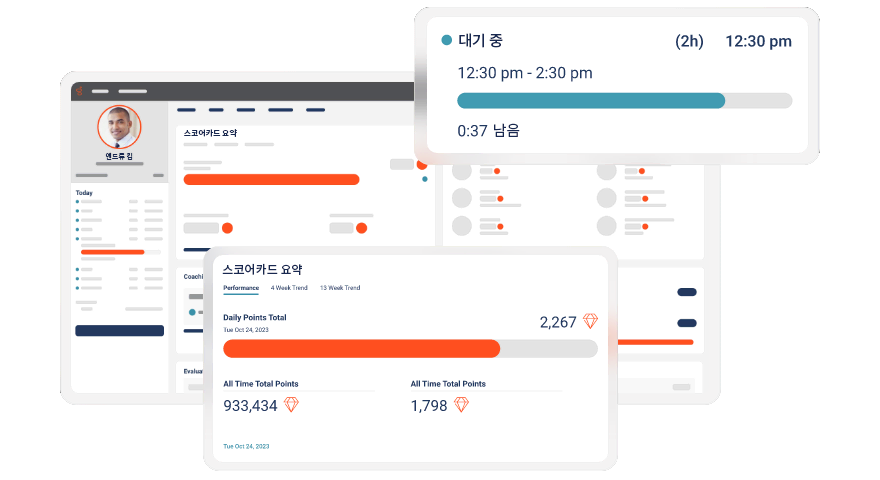
Genesys Cloud Workforce Engagement Management is native to the Genesys Cloud platform, not a third-party integration. Scheduling, forecasting, quality management and coaching workflows operate on the same interaction data as the rest of the platform. Intraday adjustments reflect real contact volume and automated quality scoring covers every interaction, not a sampled subset.
For distributed support teams, that coverage matters. QA programs that rely on manual sampling miss the compliance signals that automated scoring at scale catches consistently.
Journey analytics and conversational intelligence
The Genesys Cloud platform connects interaction-level data to journey-level insights, giving operations teams visibility into where experience breaks down across the full customer lifecycle. Native journey analytics surfaces the patterns driving repeat contacts, escalations and self-service abandonment without requiring a separate analytics platform.
Conversational intelligence adds speech and text analytics across every recorded interaction, flagging intent, customer sentiment and compliance risk phrases automatically. Your quality and compliance teams spend less time reviewing calls manually and more time acting on what the data surfaces.
Integration depth
The Genesys Cloud platform connects to major CRM systems, core banking platforms and service management tools through prebuilt integrations and an open API layer. A broad library of validated connectors spanning Salesforce, ServiceNow and leading core banking providers is available through the AppFoundry Marketplace.
For your agents, that means a single interaction view with real-time access to account data, transaction history and open cases. For your operations teams, it means the contact center is connected to the systems that run the business.
Real-world results: How financial institutions use Genesys
HSBC is one of the world’s largest financial services organizations, operating across dozens of markets with a contact center footprint to match. Like many global institutions, it lacked end-to-end visibility into its customer experience. Interactions were transferred frequently, handle times were high and supervisors had limited access to the real-time data they needed to manage effectively.
The challenge mapped directly to the evaluation criteria that matter most in banking: fragmented channel management, limited operational intelligence and no unified view of customer interactions across the business.
Partnering with Genesys, HSBC deployed the Genesys Cloud platform with predictive routing, agent copilot and built-in Genesys Cloud Workforce Engagement Management, consolidating channel management and quality oversight into a single platform.
The results:
- 48% reduction in abandonment rates
- Five-minute reduction in handle time per interaction
- 32% reduction in transfers regarding complaints
- Improved first-contact resolution
- Two hours saved per day by supervisors through real-time operational insights
- $60 million in predicted three-year value from AI orchestration
“One of the wonders of Genesys Cloud is its AI capabilities. AI is totally intertwined throughout the totality of the Genesys solution,” said Paulette Toynton, Global Head of Channel Service and Customer Care at HSBC.

FAQs about customer experience software for banks
What is the best customer experience software for banks?
The best CX software for banks depends on the scale, regulatory environment and transformation stage of your institution. If you’re operating across multiple regions with complex routing, compliance and workforce management needs, you need a unified platform rather than a collection of point solutions. The Genesys Cloud platform is built for that environment. It combines AI, omnichannel orchestration, workforce engagement management and compliance controls in a single architecture.
What compliance regulations do banks need in their CX platform?
The most common regulatory requirements in banking customer experience environments include Payment Card Industry Data Security Standard (PCI DSS) for payment data security; System and Organization Controls 2 (SOC 2) for system reliability and data handling; GDPR for institutions operating in or serving customers in the EU; and Federal Financial Institutions Examination Council (FFIEC) guidelines governing contact center operations and data management in US financial institutions. The platform should support the security controls, auditability, access management, interaction recording and reporting that these obligations require.
How long does a banking CX platform implementation typically take?
Implementation timelines vary based on the complexity of the existing environment, the number of channels being migrated, integration requirements and the size of the agent population. Enterprise deployments typically range from several months to over a year and different regulatory requirements could apply depending on your environment; if they do, the platform should support the security controls needed to meet them.
If you’re moving from legacy on-premises systems, expect longer timelines than if you’re consolidating cloud-based tools. Phased rollouts are common in banking, allowing you to migrate by region, channel or business unit while maintaining continuity.
How is Genesys Cloud different from other CX platforms for banking?
Many platforms require you to assemble compliance, AI, workforce management and analytics capabilities from separate vendors. The Genesys Cloud platform delivers all of these natively on a shared data layer. That architecture means AI has access to real-time interaction data, compliance controls apply consistently across every channel and workforce management operates without a synchronization delay. If you’re weighing Genesys against alternatives or considering a platform consolidation, that unified architecture is the primary differentiator.
Is customer experience software for banks the same as CRM or core banking software?
No. CRM software manages customer records, relationships and service workflows. Core banking software handles account infrastructure, transactions and onboarding. CX software manages the contact center layer: routing, AI, agent tooling, omnichannel interactions, workforce engagement and analytics. In a well-architected banking environment, all three are connected, but they serve distinct functions. The contact center platform is where your customer-facing service operations run, and it needs to integrate with both CRM systems and core banking software to give your agents the context they need to resolve interactions effectively.
Next steps: Choosing the right banking CX software
The criteria in this guide point to a consistent conclusion: Banking CX software fails when compliance, AI and workforce management are treated as features to add rather than properties of the platform itself.
Fragmented architectures create fragmented outcomes. A QA tool that doesn’t share data with your routing engine can’t improve the interactions it evaluates. An AI layer disconnected from the contact center can’t act on the context it needs. For your teams operating across agents, channels, regions and audits, those gaps compound.
The Genesys Cloud platform consolidates contact center software, AI capabilities, workforce engagement management and conversational intelligence in a single architecture. Fewer integration points mean fewer compliance gaps, lower total cost of ownership and a data layer that connects the decisions your platform makes.
If you’re evaluating platforms, start with your own architecture requirements. Take a self-guided tour, explore pricing or talk to a specialist who works with financial services organizations.