Xperience: Highlights from CX+AI Event of 2026
Highlights from CX+AI Event of 2026
Watch now

Genesys Cloud CX vs. Zendesk Suite for enterprise contact centers

Zendesk Suite helps service teams manage support workflows, tickets, artificial intelligence (AI), voice and customer conversations, while the Genesys Cloud CX® offering is built for enterprise contact centers that need advanced voice, routing, AI, workforce management and operational scale.

More than 8,000

organizations worldwide

4.4/5

on G2

Real customers, real results

Genesys enables organizations to deliver exceptional customer experiences, drive measurable outcomes and scale seamlessly.

Overview: Genesys Cloud CX vs. Zendesk Suite at a glance


When you’re evaluating Zendesk Suite against Genesys Cloud CX, the core difference comes down to platform origin. Zendesk Suite was built for customer service ticket resolution, with ticketing workflows, knowledge management, agent productivity and AI at its center.

The Genesys Cloud™ platform was built for enterprise contact center operations, with native voice, intelligent routing, embedded workforce engagement management and AI trained on customer experience data. The right choice depends on whether your organization needs a service desk that handles contacts or a contact center platform built to orchestrate every interaction at scale.

Genesys Cloud CX Zendesk Suite
Meets Requirements 8.6 / 10 8.6 / 10
Ease of Use 8.9 / 10 8.6 / 10
Ease of Setup 8.4 / 10 8.0 / 10
Ease of Admin 8.5 / 10 8.2 / 10
Has the product been a good partner in doing business? 8.5 / 10 8.4 / 10
Product direction 8.7 / 10 8.0 / 10

Source: G2, 2026.

The Genesys Cloud CX solution leads across ease of use, setup, administration and product direction. Reviewers who call Genesys “heavier” are describing a platform built for the complexity and scalability that enterprise contact center operations actually require, and that initial investment in setup helps pay forward in operational depth.

Feature-by-feature comparison: Genesys Cloud CX vs. Zendesk Suite

Genesys Cloud CX strengths and honest limitations

The Genesys Cloud CX offering is purpose-built for contact center architecture with voice, routing, IVR, workforce engagement management and AI native to the platform.

Voice and conversational intelligence: Native voice with speech and text analytics built in, giving supervisors real-time and post-interaction insight across every call.

Workforce engagement management: Forecasting, scheduling, quality assurance monitoring and employee performance management are embedded — not integrated from a third party.

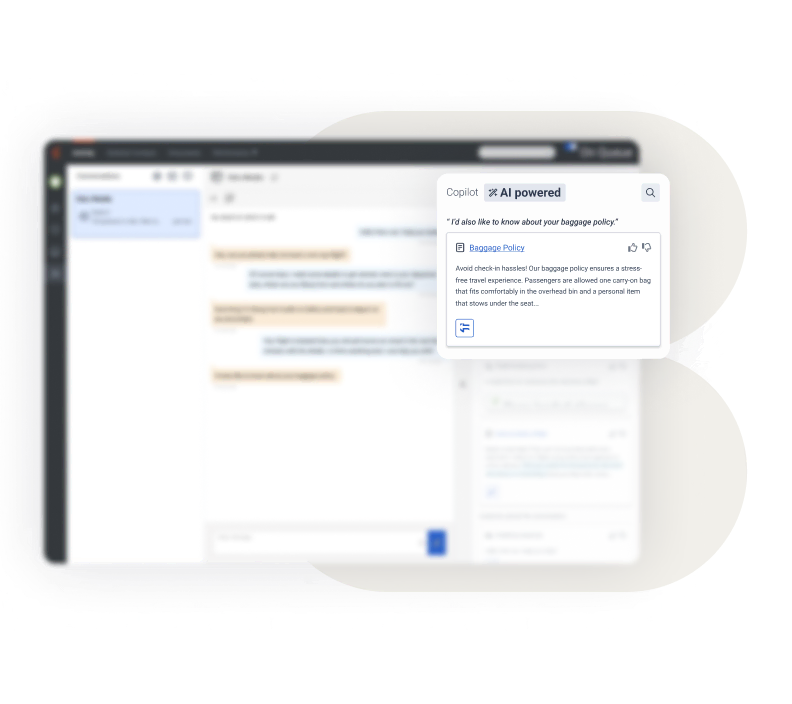
Agentic AI built for customer experience: Virtual agent, predictive engagement, Genesys Cloud Agent Copilot and agentic AI trained on customer experience data, not general-purpose models.

Honest limitations: Setup complexity and learning curve are real for organizations new to purpose-built contact center platforms. Pricing starts higher than Zendesk Suite. 

Zendesk Suite strengths and honest limitations

Zendesk Suite leads on ease of setup and adoption, with deep ticketing, case management and workflow automation at its core.

Integration marketplace: A broad app marketplace supports connections to CRM systems, productivity tools and third-party services.

Voice: Available via Zendesk Contact Center. Enterprise contact center leaders should validate depth and fit for complex, high-volume operations. [SOURCE: https://www.zendesk.com/service/contact-center/] 

Workforce management: Workforce management capabilities are available. Buyers with complex scheduling and forecasting requirements should verify enterprise fit.

Honest limitations: Voice, workforce management and AI capabilities exist but were not the original design center of the platform. Enterprise contact centers with complex routing or workforce needs should pressure-test depth before committing.

Capability Genesys Cloud CX Zendesk Suite / Zendesk Contact Center
Enterprise voice at scale ~
Advanced routing / ACD ~
IVR and callbacks ~
Workforce management ~
Quality management ~
Genesys Cloud Agent Copilot
AI agents / virtual agents
Speech and text analytics ~
Ticketing and case management ~
Knowledge base / self-service
App marketplace / integrations
Enterprise contact center operations ~

✓ Fully supported / core platform strength   ~ Supported, but buyers should validate depth, packaging, scalability or fit for complex enterprise operations   × Not supported natively

Source: G2

The table reveals two platforms with fundamentally different design centers. Zendesk Suite is stronger where ticket resolution and case management drive the operation. The Genesys Cloud CX solution is stronger where voice, routing, workforce management and AI need to work together at enterprise scale — and the setup investment is justified by the operational depth you get on the other side.

What customers say: Genesys Cloud CX and Zendesk Suite reviews

Genesys Cloud CX

Balanced, efficient scheduling (G2): “The workforce management features help keep our call center efficient and balanced.”

Unified omnichannel interface (G2): “Having voice, chat, email, and messaging integrated into a single interface really simplifies things.”

Built for AI adoption (TrustRadius): “Genesys Cloud CX is very well suited for companies that want to implement AI.”

Support through a crisis (TrustRadius): “Genesys has greatly helped us when our business went through a product recall just recently.”

Zendesk Suite

Consolidated channel queue (TrustRadius): “Zendesk Suite helped us consolidate multiple channels (email, messaging, WhatsApp, phone) into a single queue.”

Reliable performance visibility (G2): “It’s very reliable and provides visibility about individual and team scores.”

Simple ticketing system (TrustRadius): “Great option for a simple ticketing system.”

Fast CRM startup (TrustRadius): “Zendesk Suite is a great solution for businesses that need a quick CRM startup.”

Body img ai powered

Transitioning from Zendesk to a CCaaS platform: What to expect

Moving from a ticketing platform to a purpose-built Contact Center as a Service (CCaaS) platform is not a lift and shift. It touches your data, integrations, agent workflows and business operations. For enterprise contact centers evaluating a move to Genesys, the work is real — but so is the payoff on the other side.

What happens to your Zendesk data

Ticket history, customer records and interaction data don’t migrate automatically. Plan for a data audit early to identify what to retain, what to archive and what your new reporting baseline looks like.

Workflow and integration continuity

Zendesk workflows, including macros, triggers and CRM integrations, won’t transfer directly. Each needs to be evaluated and rebuilt in the Genesys environment. The Genesys AppFoundry® Marketplace offers prebuilt integrations, including Salesforce and ServiceNow, that can replace or extend what you had.

Agent training and onboarding timeline

Agents moving from Zendesk are moving from a ticket-based interface to an omnichannel contact center environment. Expect two to four weeks for frontline agents, with additional time for supervisors and workforce managers.

Business continuity during transition

A phased migration reduces risk. Most enterprise contact centers run parallel environments during transition, keeping Zendesk live for existing workflows while standing up Genesys for new channels or queues.

Zendesk integration or replacement considerations

Not every buyer is considering a full replacement. Many enterprises keep Zendesk for ticketing while deploying the Genesys Cloud CX offering for contact center operations, preserving what works in Zendesk while adding enterprise-grade contact center capabilities.

Resources hub

How Genesys compares to other enterprise contact center solutions

Zendesk Suite and the Genesys Cloud CX solution are built for different jobs. Zendesk Suite leads on service resolution, ticketing, workflow automation and fast support team adoption. The Genesys Cloud CX offering leads in enterprise contact center operations: native voice, intelligent routing, embedded workforce engagement management, agentic AI and analytics built for complex, high-volume environments.

The Genesys Cloud CX solution is the stronger fit where voice volume is high, routing is complex and workforce management is mission critical. Zendesk Suite is the stronger fit for support teams prioritizing ease of adoption and ticket resolution. Buyers with advanced contact center requirements should validate depth and enterprise fit before committing.

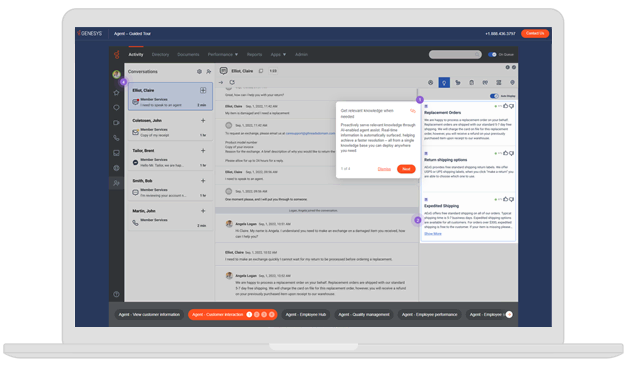
If your current platform is creating ceilings on call volume, agent efficiency or routing complexity, it’s worth seeing what a purpose-built contact center platform looks like in practice. Begin your self-guided tour, contact us or see pricing.


Zendesk isn’t the only platform enterprises evaluate alongside Genesys. If you’re running a broader comparison, these resources cover the other shortlist contenders.

  • Avaya: Legacy infrastructure, end-of-life risk and limited native AI make it a common migration trigger. See how the platforms stack up: Genesys vs Avaya.
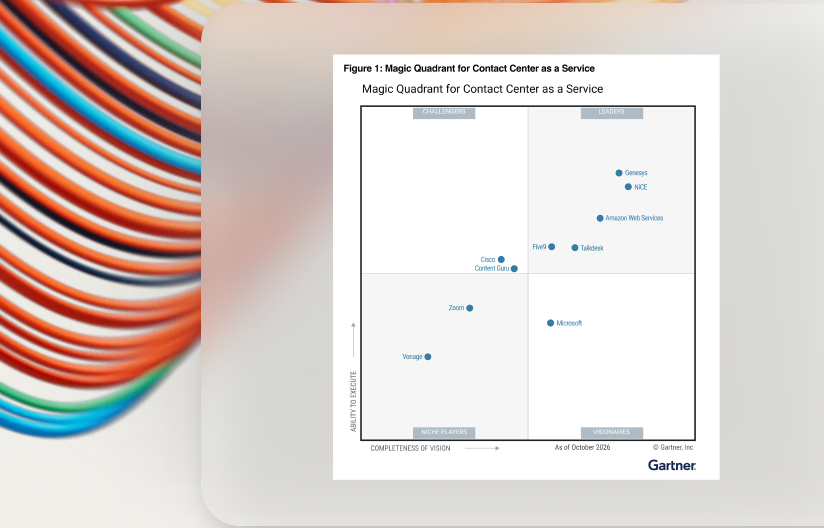
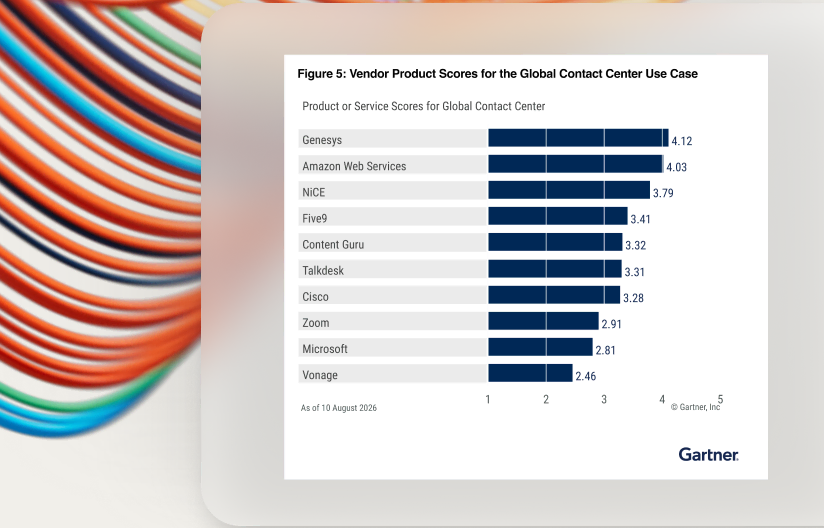
  • Five9: A capable cloud platform for mid-market, but narrower in AI depth and enterprise scale. See the full breakdown: Genesys vs Five9.
  • NiCE CXone: A familiar enterprise name, but buyers increasingly cite gaps in AI depth and platform flexibility. See the full comparison: Genesys Cloud CX vs. NiCE CXone.

Evaluating beyond NiCE CXone? See the full list of alternatives.

FAQs About Genesys Cloud CX and Zendesk Suite

What is the difference between Zendesk and Genesys?

Zendesk was built for customer service ticket resolution — managing support requests, workflows and agent productivity. The Genesys Cloud platform was built for enterprise contact center operations, with native voice, intelligent routing, workforce engagement management and AI trained on customer experience data. The platforms share some surface-level capabilities but serve different operational purposes.

Does Genesys have a ticketing system?

Genesys Cloud includes work items and case management capabilities, but ticketing depth is not its design center. Organizations that rely heavily on ticket-based workflows may choose to keep Zendesk for support operations while deploying Genesys for contact center operations.

How do I know if my team has outgrown a support platform?

Common signals include routing logic too complex for ticket queues, voice volume that exceeds what your current platform handles reliably and workforce scheduling managed outside the platform. If your contact center is building workarounds, your platform may be the ceiling. 

How does AI work differently in a contact center platform than a support platform?

In a support platform, AI typically assists with ticket deflection, suggested responses and knowledge retrieval. In a purpose-built contact center platform, AI operates across the full interaction: predicting customer intent, routing to the right agent, assisting in real time and analyzing every conversation after.

What happens when a customer switches channels mid-interaction?

In the Genesys Cloud platform, context follows the customer. If a customer moves from web chat to voice, the agent sees the full interaction history without asking the customer to repeat themselves. That continuity is a function of the platform’s native omnichannel architecture, not an integration.

What should organizations expect during the transition to Genesys Cloud CX?

Expect a phased process covering data migration, workflow rebuilding, integration setup and agent training. Frontline agent onboarding typically takes two to four weeks. Phased migration approach keeps business continuity intact and lets teams validate Genesys capabilities before transitioning legacy workflows.