Data, analytics and customer journey management

Transform signals into action. Unify data, measure interactions and analyze experiences to make smarter decisions in every moment.

Unlock the power of data, analytics and journey insights

Every interaction tells a story. But without a clear view across systems and channels, it’s hard to see what customers are really experiencing, or where to improve. The Genesys Cloud™ platform gives you the tools to bring data together, track what matters and act faster.

Build a consistent data foundation

With the Event Data Platform, signals are captured and standardized in real time to support analytics, journey insights and AI tools.

Analyze performance in real time

Monitor KPIs, track flow and agent performance, and investigate service issues. Built-in analytics help teams evaluate outcomes and refine what matters most.

Understand behavior and optimize outcomes

Reveal how customers experience your capabilities and how journeys unfold across channels. Measure conversion, effort and drop-off using real interactions.

Orchestrate customer experiences with an end-to-end solution

Every stage of the customer experience (CX) has differing needs, but they’re all a part of the same journey. Deeply understanding your customers both as individuals and a collective takes a variety of tools. With the AI-powered Genesys Cloud platform, you can enable world-class customer journeys at scale.

Empower every team to work smarter with built-in insight

With data, analytics and journey insights together, teams spend less time chasing data and more time improving outcomes with experience optimization.

Ai agent copilot fullscreen

Unify customer data in real time

Capture and structure interaction data as it happens, resolving it to a unified customer profile that persists across analytics, journey measurement and AI to ensure consistent, connected insight.

Ai agent copilot fullscreen 2

Track performance across roles and channels

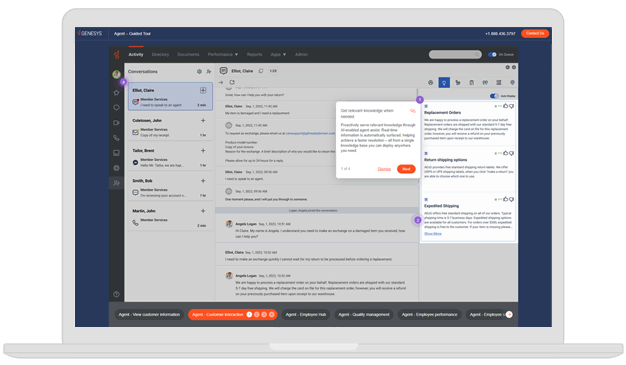
Use out-of-the-box dashboards, reports and alerts to monitor KPIs, investigate service issues and drill into agent, virtual agent, flow and operational metrics.

Ai agent copilot fullscreen (3)

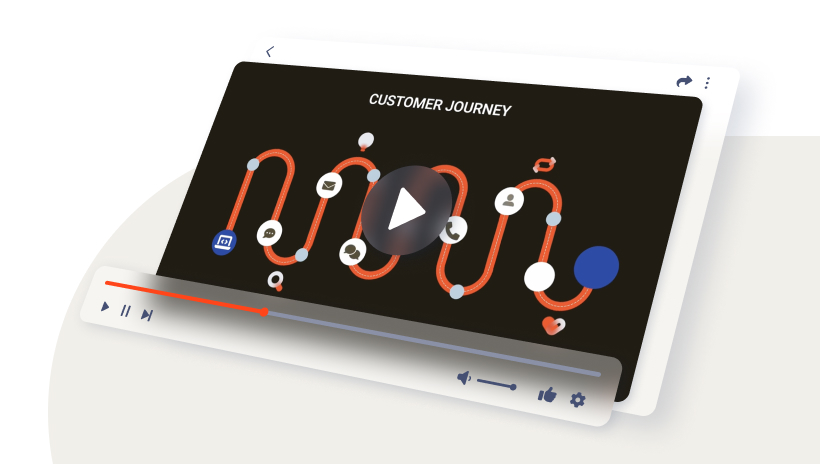
Understand how journeys are working

See how digital and AI investments are performing across the customer journey, highlighting customer feedback, friction points, drop-offs, conversion trends and behavioral patterns.

Ai agent copilot fullscreen (1)

Make CX data accessible across your business

Export structured data from the Genesys Cloud Data Lakehouse to business intelligence platforms and personalization engines to activate customer insight across your enterprise.

Ai agent copilot fullscreen (2)

Improve automation with AI signals

Leverage sentiment, intent and behavioral signals to fine-tune routing, optimize flows and drive smarter orchestration.

Dajm lobby page image 01

Enrich insight with third-party data

Combine Genesys interaction history with external context from CRM systems, marketing platforms or web behavior to enhance segmentation, personalize orchestration and act with more precision.

Built for better decisions, faster

A unified platform means data and insight are ready to use from day one, no stitching or complex setup required.

Dajm lobby page image 5

Integrated by design

Data, analytics and insights are natively connected: one platform, no handoffs.

Data that works across tools

Unified profiles and structured event data deliver usable context across automation, routing, analytics and reporting.

Structured for scale and security

Role-aware access, exports and secure sharing extend insight across your business without breaking governance.

Turn interaction data into smarter action

Without visibility across systems and channels, it’s hard to know what’s working — or what to improve. Genesys Cloud connects data, analytics and journey insights to give you a clear view of performance and customer behavior, so teams can act with confidence.

Discover how real-time insights help optimize experiences, efficiency and outcomes.

Thank you for your interest.

We’ll contact you directly to set up a date and time that works with your schedule.

Frequently asked questions about customer journey management

Can we export Genesys Cloud data into our business intelligence tools, and how is access governed?

Yes. Genesys Cloud lets you export structured, analysis-ready datasets from analytics and the Event Data Platform today so you can use your CX data in enterprise business intelligence (BI) tools like Power BI, Tableau or Snowflake. With governed export options — including static link exports that allow BI platforms to automatically pull the latest data — teams can operationalize insights without manual refreshes. All exports follow the secure, role- and division-aware Genesys Cloud governance model, ensuring that access is properly controlled and compliant at every stage.

What is EDP and what signals does it capture?

The Event Data Platform (EDP) is the foundational data layer of Genesys Cloud. It connects signals in real time across conversations; bots; messaging; routing; web and mobile activity; and work items. EDP ingests these events and structures them in a real-time data lakehouse, flattening and normalizing them into query-ready records organized by session, customer and intent. 

Instead of event data living in separate services, EDP unifies it. Together with the unified customer profile, it turns raw signals into governed, cross-functional context so analytics, AI, orchestration and journey optimization all operate from the same source of truth.

How does identity resolution create a unified customer profile in EDP?

Identity resolution in Genesys Cloud connects customer identifiers across sessions and channels, enabling a unified customer profile (UCP) that powers orchestration, personalization and agent context. By matching and merging records that share identifiers or behavioral signals, Genesys Cloud links new identifiers — such as moving from a cookie to an email to a phone number — back to the same individual. Incoming identifiers are checked against existing contacts, and multiple partial records can be combined into a single, unified profile. External systems like customer data platforms (CDPs) or CRM systems can also supply identifiers to improve matching.

Together, these capabilities allow Genesys Cloud to recognize customers consistently and deliver more relevant, connected experiences.

How does EDP work with external customer data?

The Event Data Platform can ingest customer data from your CRM system, CDP or other business systems to enhance identity resolution and enrich the unified customer profile. When this data enters Genesys Cloud, it’s linked to an external contact — a lightweight record that represents a person or organization and is tied to identifiers like an email, phone number, CRM ID or cookie-based session ID. These identifiers help Genesys Cloud recognize customers across channels from chat to social media, connect related identifiers over time and maintain continuity between interactions. External data adds useful context to the profile, while your CRM system or CDP remains the system of record.

What is a data lakehouse?

A data lakehouse is a modern data architecture that combines the flexibility of a data lake with the performance, reliability and governance of a data warehouse. It allows organizations to store large volumes of raw data while also structuring it into analysis-ready formats for reporting, analytics and AI. By unifying these capabilities in one system, a data lakehouse makes it easier to manage diverse data sources, run both real-time and historical queries, and support a wide range of use cases — from dashboards to advanced modeling. Many customer experience platforms use a data lakehouse to organize interaction data and ensure teams can access accurate, consistent insights at scale.

What operational analytics do we get out of the box, and what can we customize?

Out of the box, Genesys Cloud provides a comprehensive set of prebuilt dashboards — including Predictive Routing, Virtual Agent, Agent Copilot, Knowledge and Channel Insights — along with more than 90 standard reports to give you fast time to insight.

You can then customize your experience by building or modifying dashboards with interactive widgets and configurable filters, allowing you to focus on the metrics that matter most to your business. Reports can also be adapted for deeper investigation into performance trends. In addition, you can configure real-time alerts, setting your own performance, presence or adherence thresholds and choosing how notifications are delivered, so issues surface before they affect outcomes.

Can supervisors monitor in real time and get alerted to issues?

Yes. Preset widgets (e.g., Agent Activity, Work Team Status, Dynamic Teams) surface live activity; real-time alerts notify by email/SMS/in-app when performance, presence or adherence thresholds are breached, with a central interface to review and manage triggers.

Do you offer dashboards to understand and measure AI tools?

Yes. Genesys Cloud includes prebuilt dashboards that make it easy to monitor the performance and impact of AI capabilities. Dedicated dashboards for Virtual Agent, Agent Copilot, Predictive Routing and Knowledge provide real-time visibility into metrics like containment, escalations, agent efficiency gains, accuracy, adoption and outcome trends. Because these dashboards are built on standardized EDP data, you can drill down for root-cause analysis, combine them with custom dashboards and track how AI investments drive operational and customer experience improvements.

What are the benefits of customer journey management software?

Customer journey management is essential because it helps you understand and optimize the full end-to-end experience your customers have — not just isolated interactions. Genesys Cloud Journey Management connects data from voice, chat, messaging, bots and web to give you a clear, unified view of customer behavior across touchpoints. This makes it easier to spot where customers are succeeding, where they’re getting stuck and what’s driving their actions. By optimizing journeys — not just touchpoints — you can reduce friction, boost satisfaction and align operations around the outcomes that matter most to customers and your business.

How long before I see results from implementing these strategies?

With many standalone journey tools, organizations often need professional services to prepare data before any analysis can begin — a process that can delay insights for months. Genesys Cloud Journey Management removes that barrier, allowing you to start analyzing how customers interact with your brand within 24 hours of purchase. You can create simple insights in minutes and begin identifying opportunities for improvement within hours.

Your timeline will depend on the complexity of your journeys, the availability of event sources and the scope of changes you want to make. And because journeys are never static, it’s important to continue monitoring and refining your strategy to sustain and build on your results.

How does journey management help organizations understand more than operational metrics?

Journey management helps organizations move beyond traditional KPIs — like customer satisfaction, Net Promoter Score, first-contact resolution or resolution time — by revealing how customers engaged with you, what they were trying to do, how much effort it took and where friction occurred. While operational metrics show performance, journey insights explain the why behind customer behavior.

By combining signals from web behavior, contact center interactions and Voice of the Customer data, journey management shows where experiences are working and where they’re breaking down. This deeper visibility also helps organizations see where AI is performing as intended, where it may need adjustments and where new AI applications could have the greatest impact — ultimately supporting continuous improvement across the customer experience.