Improving interaction quality with intelligent routing
Customers expect to reach the right person quickly. Poor routing leads to repeat explanations, long wait times and frustration. Enterprises enhance call center experience by using skills-based routing, intent detection and real-time decisioning to connect customers with the best resource on the first attempt.
Elevating service consistency through agent enablement
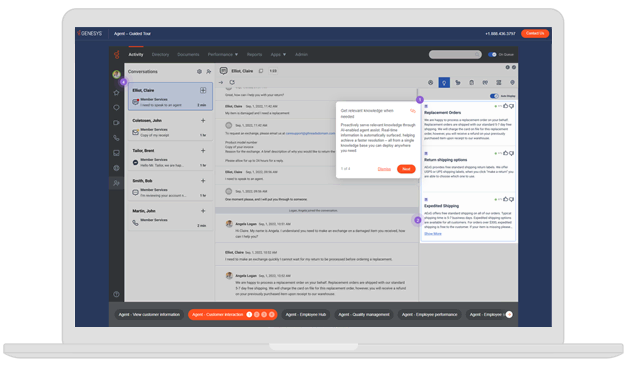
Agents cannot deliver great experiences without the right tools. Modern platforms use knowledge bases, artificial intelligence (AI)-powered guidance and unified desktops to streamline workflows. Enterprises apply these capabilities to improve accuracy, reduce handle time and ensure each customer receives consistent, empathetic support.
Reducing customer effort with automation and self-service
Routine questions often flood call centers. Automated self-service, conversational AI and proactive outreach resolve many needs before customers reach an agent. Organizations use automation to lower call volume, shorten hold times and create a smoother call center experience across channels.
Using analytics to uncover journey friction and training needs
Understanding why interactions succeed or fail is key to improving call center experience. Speech and text analytics reveal sentiment, trends and breakdown points. Enterprises apply these insights to refine processes, strengthen coaching programs and elevate both customer and employee outcomes.
Improving operational performance with real-time visibility
Supervisors need immediate insight into queues, agent availability and performance indicators. Real-time dashboards allow them to adjust staffing, redistribute workload and intervene when needed. Enterprises rely on these tools to maintain service levels and keep the experience consistent during high-volume periods.