




Many organizations struggle to meet modern customer expectations because their customer experience technology is spread across multiple systems. Different teams use different tools, and customer data often lives in separate places, siloed and unreachable when it’s needed most.
As artificial intelligence (AI) becomes more integral to customer experience, these challenges compound when disconnected AI tools are added to already disconnected systems and data. Companies need technology that helps teams work together, share information and act on customer needs in real time.
That is why many business and technology leaders are focused on moving away from disconnected point solutions and toward unified customer experience (CX) platforms.
Why CX teams are rethinking point solutions
Organizations are under leadership pressure to reduce costs and improve operational efficiency, while they also work to deliver better customer experiences.
For years, companies addressed new needs by adding new tools. One application handled customer support over the phone. Another managed analytics. A third supported chat or messaging. While each solution solved a specific problem, the result was often a fragmented technology environment.
Today, CX leaders need a better way forward. They need systems that help teams resolve more customer issues through automation, work faster, support AI-driven decisions and keep customers engaged throughout their journeys. The problem is that many teams are stuck instead with siloed tools that don’t work together.
What is a point solution in CX?
A point solution is a tool designed to solve one specific problem or support one specific function. These tools can be effective within their areas of focus. However, they are often built to operate independent of other solutions and may not integrate well into a single cohesive system.
Problems arise when these systems don’t share information. Customer data becomes fragmented, employees lack context about interactions and customers, and AI systems are unable to access a complete view of the customer.
This makes it harder to provide consistent service and informed decisions across the organization and the customer journey.
Common examples of a fragmented CX tech stack
- Standalone contact center software
- Separate conversational AI chatbot platforms
- Independent workforce management tools
- Customer service applications
- Messaging and digital channel tools
- Analytics platforms
- Customer data systems
What is a unified CX platform?
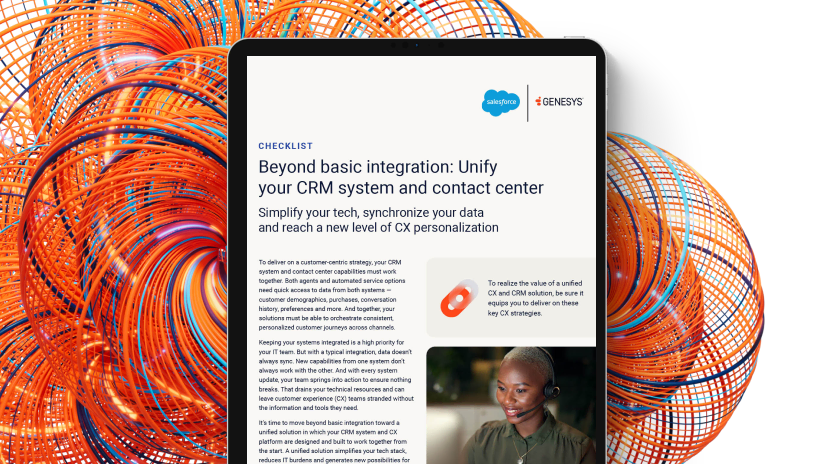
A unified CX platform, on the other hand, brings customer interactions, data, AI and workflows together in one environment. Instead of connecting separate tools over time, a unified platform is designed to work as a single system from the start or to help consolidate your existing systems in a single place.
A modern customer experience platform creates a shared foundation for customer engagement, operational management and continuous improvement, breaking down silos and making it far easier to build journeys that can involve many touchpoints across channels.
How a platform connects channels, data, AI and workflows
After all, customer journeys don’t happen in one channel. A customer may start on a website, continue through messaging and later contact customer service via voice, messaging or self-service options like virtual agents.
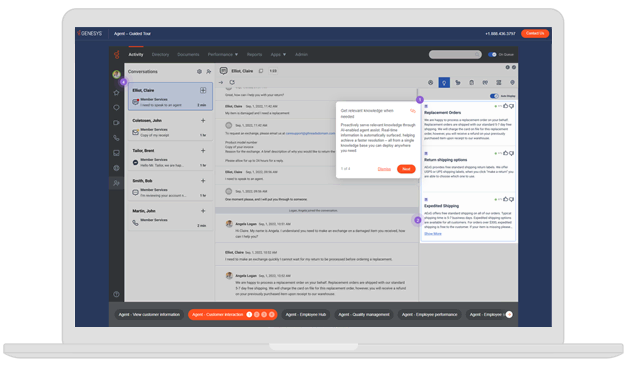
A unified platform connects those interactions through a shared data and AI foundation. It captures signals across multiple channels and turns them into real-time insights. More importantly, it maintains context throughout the journey. Customer service agents — human or AI — can access customer history, intent and preferences across every interaction.
This is the foundation of experience orchestration.
Rather than managing each interaction separately, orchestrated experiences coordinate data, decisions and actions across the entire customer journey. The result is a more connected and personalized experience for customers and employees alike.
Point solutions vs. unified CX platforms: Key differences
Organizations typically compare point solutions vs. platforms when fragmented technology starts creating operational inefficiencies, inconsistent customer experiences or barriers to AI adoption. While point solutions can solve individual problems, a unified CX platform offers a stronger long-term approach by connecting data, channels, AI and workflows into a single system that can adapt as customer and business needs evolve.
Customer data
Point solutions store information in separate systems. A unified CX platform creates a shared view of the customer.
Scalability
As organizations grow, managing many disconnected systems becomes more difficult. Unified platforms make it easier to add new capabilities without creating new silos.
Governance
A unified platform can simplify and strengthen governance, security and compliance by reducing the number of systems that must be managed.
Speed
Teams can often move faster when data, AI and workflows are already connected.
Customer outcomes
Most importantly, unified platforms help organizations deliver a seamless experience and improve automation outcomes, resolution rates and customer satisfaction across channels.
The hidden costs of a fragmented CX ecosystem
Disconnected data and incomplete customer context
Every customer interaction creates valuable information. However, that information loses value when it remains trapped in separate systems, causing issues across the customer experience.
Employees struggle to see the full customer history. AI tools may not understand customer intent. Customers need to repeat information multiple times. Without connected data, organizations struggle to build a strong understanding of customer needs and behaviors and fail to create a seamless end-to-end experience.
Integration complexity and rising IT costs
As complexity grows, organizations often have to spend more time managing technology than improving customer experiences. Every new system adds another integration to manage and more technical debt, including licenses for all the point solutions you’re using. Over time, these integrations require maintenance, updates and troubleshooting. This increases costs and creates more work for IT teams.
Inconsistent experiences across channels
Customers expect consistency whether they engage through voice, digital channels, messaging or self-service. When systems are disconnected, experiences often feel disconnected as well. Customers may receive different answers from different channels. Service quality may vary. Trust can suffer.
These problems make it harder to keep customers engaged and build long-term loyalty.
Why AI raises the stakes for CX technology decisions
AI is becoming a major driver of customer experience transformation. But AI is only as effective as the data and context behind it.
Bolted-on AI struggles without unified data and orchestration
Many organizations add AI-powered tools to existing systems. While this can automate tasks, it does not always improve outcomes.
AI is only as effective as the data behind it. It needs access to customer history, business knowledge and operational context to understand what has happened, what matters and what should happen next. When that information is fragmented across disconnected systems, AI loses the persistent memory needed to make informed decisions. It may generate incomplete answers, repeat work that has already been done or miss opportunities to anticipate customer needs and resolve issues proactively.
A unified platform with built-in AI provides the foundation needed to succeed. It captures customer signals across the enterprise and turns them into shared intelligence.
A platform does more than connect systems. It aligns information, decisions and actions across the business. This supports agentic orchestration across human and virtual agents, channels and workflows in real time to accelerate operational performance and orchestrate the consistent, connected experiences that customers now expect.
With shared context and persistent memory, AI can move beyond responding to requests and begin orchestrating end-to-end experiences across the customer journey.
What to look for in a unified CX platform
Organizations evaluating CX technology should focus on capabilities that support both current needs and future growth.
Unified customer data and real-time intelligence
Look for a platform that creates a shared customer data foundation. This foundation should support real-time insights and help teams make better, more data-driven decisions.
Experience orchestration across the customer journey
The platform should support experience orchestration across channels, teams and business processes. This helps organizations deliver personalized experiences while improving efficiency.
Agentic orchestration and human-AI collaboration
Human employees and AI systems should work together using shared context, goals and customer history. Agentic orchestration not only coordinates work across people, AI agents and workflows, but also enables AI to take action on the customer’s behalf. Instead of simply recommending the next step, AI can initiate workflows, complete routine tasks, coordinate activities across systems and help move interactions toward resolution. This accelerates issue resolution, reduces manual effort and enables organizations to deliver faster, more consistent and personalized experiences while improving operational efficiency and long-term business outcomes.
Open architecture, governance and ecosystem flexibility
Organizations should also look for an open architecture that supports integration, governance and future flexibility. This helps businesses adapt as technology and customer expectations continue to evolve.
Move from fragmented tools to orchestrated CX
Customer journeys span channels, teams and systems. Managing those journeys with disconnected tools creates friction for both customers and employees.
A unified CX platform provides a different approach. It connects data, systems and channels across the enterprise while creating a shared foundation for AI and orchestration.
This is the difference between integration and orchestration. Integration connects tools. AI-powered Experience Orchestration coordinates customer experience across people, AI, systems and data in real time.
As organizations move toward autonomous CX, agentic orchestration will play a central role. Businesses that adopt a unified platform will be better positioned to deliver personalized experiences, improve operational efficiency and make faster decisions at scale.
Explore our CX Playbook and related Genesys capabilities to learn how a unified platform can help transform fragmented customer engagement into connected, orchestrated experiences.