





15%
organic reduction in overall greenhouse gas emissions since FY25
Genesys is working to deliver positive impact through every conversation powered by our technology.
 Read our latest report

15%
organic reduction in overall greenhouse gas emissions since FY25

33 million+
conversations enabled between charities and people in need from FY24 through FY26

12,000
volunteer hours logged by employees
“At Genesys, we are using AI to orchestrate the next generation of customer and employee experiences. Our approach is based on the understanding that innovation creates lasting value when it benefits the planet, empowers people and supports sustainable business performance.
We are building the future of experience through responsible innovation, trusted AI, environmental stewardship, strong governance and expanding opportunities for the communities where we live and work."

We’re pursuing our goal to become a net-zero company by 2040
Eight LEED-certified offices, including four earning LEED Platinum
Near-term emissions-reduction targets validated by the Science Based Targets initiative (SBTi)
Genesys Cloud operations have been carbon neutral since FY25 through emissions reductions and application of carbon credits against residual emissions.
Genesys annual emissions1 (metric tons CO2e)

We’ve obtained reasonable assurance for our Scope 1 and 2 emissions and limited assurance for Scope 3 emissions from our external auditor, Apex Companies LLC. View our GHG Emissions Verification Statement to learn more.
Information disclosed pursuant to California AB 1305 is available in our FY26 Sustainability Report, Apex GHG Emissions verification statement and our FY26 Genesys Offset Disclosure.
1. “Annual emissions” means Genesys Scope 1, Scope 2 and Scope 3 emissions identified, estimated and quantified to date. Scope 2 data is location-based. Genesys continues to refine its GHG accounting methods and anticipates these calculations will fluctuate as a result.
2. FY25 figures have been restated from those published in the FY25 Sustainability Report to reflect updated methodology and improved data quality. See the FY26 Sustainability Report for further detail.

20
hours of paid volunteer time provided to each employee annually

1,000+
nonprofit organizations supported through approximately 12,000 employee volunteer hours logged

1 million+
views of virtual career advice for students provided by employees
Genesys Sustainability Ambassadors have taken steps to integrate sustainable practices into their behaviors — and they actively engage fellow employees to do the same.

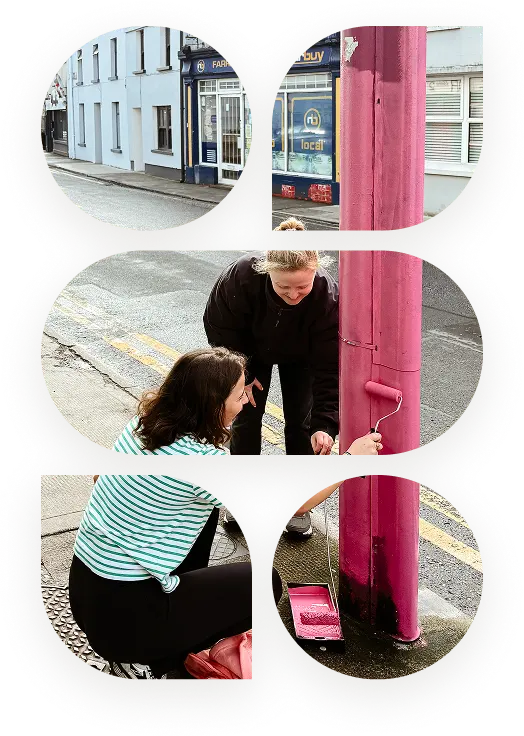
Our Impact Together program is employee-driven and employer-supported, meaning that we work collaboratively and strategically with our team to accelerate positive change in the communities where we live and work. Our charitable giving and volunteer efforts focus on three pillars:
Pouring empathy into communities to provide access to critical care
Empowering and skilling the next generation of tech leaders
Protecting the planet as we scale
Through the Charitable Discount Program, we empower charitable organizations to deliver proactive, predictive and personalized experiences to improve productivity and strengthen employee engagement.
InspiriTec, a social enterprise IT services provider dedicated to removing barriers for customers and empowering employees, aimed to modernize its help desk and contact center operations. By implementing the Genesys Cloud™ platform, InspiriTec reduced employee onboarding time by 12% and cut client onboarding time in half while supporting inclusive employment.

“Genesys is more than a technology provider to us; they are a partner in helping us remove barriers, create opportunity and prove that mission-driven organizations can lead the market in both compassion and capability.”

We participate in the United Nations Global Compact, aligning our strategies and operations with its principles on human rights, labor, environment and anti-corruption.
Responsible AI is grounded in ethical design and proactive governance. The following five principles inform how we build, evolve and deploy AI systems to support ethical, safe and human-centered outcomes.


Certified as a Great Place to Work® in 17 countries

Maintained CDP B score for the fourth consecutive year and earned an A score in the CDP Supplier Engagement Assessment

Achieved fourth consecutive EcoVadis Gold Medal

Winner of Best Use of AI in Customer Service at the 2025 A.I. Awards by The Cloud Awards

Genesys Named a “Best-Led Company” by Glassdoor
Genesys fiscal year 2026 report covers the period February 1, 2025, through January 31, 2026.
About our Sustainability Report
The metrics on this page are excerpted from our fiscal year 2026 sustainability report, which includes updates on our sustainability strategy, performance and related metrics, and should be read in conjunction with the full fiscal year 2026 sustainability report, covering the period from February 1, 2025, to January 31, 2026, with additional information on activities, where appropriate, through July 2026. Unless indicated or the context requires otherwise, all metrics cover our fiscal year 2026.
The goals and projects described on this page and in our sustainability report are aspirational; as such, no guarantees or promises are made that these goals and projects will be met or successfully executed. Furthermore, data, statistics and metrics included on this page and in our report are unaudited estimates, not prepared in accordance with generally accepted accounting principles (GAAP), continue to evolve and may be based on assumptions believed to be reasonable at the time of preparation, but should not be considered guarantees and are subject to future revision. In particular, GHG emissions data on this page reflects methodologies and data sources that have evolved over time; historical figures may not be directly comparable to figures for more recent years. See the FY26 Sustainability Report for further detail.
Genesys Cloud operations neutrality statement*
Genesys calculates the annual emissions from the operations of Genesys Cloud based on (i) the estimated annual emissions from Genesys Cloud AWS usage and its internal IT computing on AWS using the AWS Customer Carbon Footprint Tool, plus (ii) the estimated annual emissions of Genesys Cloud Edge devices which manage connections between phones, SIP trunks, telephony gateways, Genesys Cloud and third-party systems. We apply carbon credits purchased from Rubicon Carbon against these annual emissions, resulting in a carbon-neutral footprint for our Genesys Cloud operations. ”Emissions from Genesys Cloud AWS usage“ include direct emissions from operations and indirect emissions from producing the electricity used to host Genesys Cloud. Emissions from all commercial agreement types (i.e., cloud, subscription, and license) are included. Emissions from research and development performed on AWS infrastructure, such as development, testing and demo systems, are included. Emissions from electricity from use of third-party tools, hardware used by developers, and upstream activities such as R&D-related travel are excluded. Emissions from reselling telecommunications services are excluded. Emissions from software integrations resulting from Genesys acquisitions are included once their systems are internalized on AWS.
Forward-looking statements
Statements of future events or conditions on this page, including those that concern future circumstances and results and other statements that are not historical facts and are sometimes identified by words such as “may,” “will,” “should,” “potential,” “intend,” “expect,” “endeavor,” “seek,” “anticipate,” “estimate,” “believe,” “could,” “project,” “predict,” “continue,” “goal,” “target” or other similar words or expressions, are forward-looking statements. Forward-looking statements are based upon current plans, estimates and expectations that are subject to risks, uncertainties and assumptions. Should one or more of these risks or uncertainties materialize, or should underlying assumptions prove incorrect, actual results may vary materially from those indicated or anticipated by such forward-looking statements. The inclusion of such statements should not be regarded as a representation that such plans, goals, targets, estimates or expectations will be achieved.
Important factors that could cause actual results to differ materially from such plans, goals, targets, estimates or expectations include, among others: changes in economic, political and business conditions; epidemics, global hostilities, natural disasters or other significant events that disrupt normal business operations or other events beyond our control and actions by governments, businesses and individuals in response to the situation; technological advances or innovation; mergers and acquisitions or significant business model changes; unexpected delays, difficulties and expenses in executing against our goals set forth on this page or in the report; and changes in laws or regulations, including those related to climate initiatives or AI governance; the evolving nature of AI technologies, including risks related to the development, deployment and governance of AI systems; changes in GHG emissions measurement methodologies, data availability or accounting standards that affect reported emissions or progress against targets; the availability, pricing and quality of carbon credits or offsets; and the ability of third-party partners, including cloud infrastructure providers, to achieve their own sustainability commitments. The forward-looking statements on this page and in the report are made as of the date of the FY26 Sustainability Report, unless otherwise indicated. We undertake no obligation to update these forward-looking statements to reflect subsequent events or circumstances.


