

The comprehensive guide to CCaaS platforms and solutions

Customer expectations continue to rise, and every interaction shapes how people feel about your brand. To keep pace, you need technology that adapts quickly, scales effortlessly and gives your teams the tools to deliver connected, emotionally intelligent experiences.

That’s why customer experience (CX) leaders are turning to contact center as a service (CCaaS). This cloud-based solution replaces the limits of on-premises systems with a flexible foundation built for innovation. It unifies communication channels, customer data, artificial intelligence (AI) and workforce engagement so you can orchestrate interactions with greater precision and consistency.

As you explore what’s possible, a modern CCaaS platform offers a clear path to stronger loyalty, higher efficiency and more meaningful experiences at scale.

CCaaS Pillar_Header image

What is CCaaS?

What is CCaaS (contact center as a service)?

Definition and core concept

Contact center as a service (CCaaS) is a cloud-based solution that gives you the tools to manage customer interactions across voice, chat, email and digital channels without maintaining on-premises hardware. A CCaaS platform delivers routing, agent desktops, reporting and workforce engagement in a single cloud environment. You access it through a subscription model instead of running servers, upgrading software or coordinating multiple vendors.

A modern CCaaS platform centralizes communication channels and customer data so your teams operate from one unified system. This can improve consistency and reduce the complexity that comes from legacy contact center solutions. Because CCaaS is a cloud approach, you gain the ability to scale, update and innovate faster than traditional systems allow.

How CCaaS differs from on-premises contact centers

Traditional on-premises contact centers require heavy capital investment. You manage hardware, telephony infrastructure and software upgrades. This often slows progress and limits your agility as customer expectations change.

“A CCaaS platform adapts in real time so you can meet customers where they are without disruption.”

A CCaaS solution removes those constraints. You operate in the cloud, so your provider handles uptime, security patches and ongoing feature improvements. You get a cost-effective model with predictable pricing and faster access to innovation. You also gain flexibility to support remote contact center agents without complicated network changes.

On-premises solutions often limit your ability to add channels, experiment with new features or respond to spikes in interaction volume. A CCaaS platform adapts in real time so you can meet customers where they are without disruption.

Common CCaaS use cases and business outcomes

Organizations use CCaaS offerings to modernize service, reduce operational friction and orchestrate better customer journeys. Common use cases include:

  • Supporting high-volume service teams with intelligent call routing
  • Enabling omnichannel support across voice, messaging, chat and social
  • Using AI-powered agent assist to improve agent productivity
  • Consolidating disconnected systems into one center as a service model
  • Scaling seasonal teams without physical infrastructure changes

The outcomes are measurable. Companies that move to a CCaaS platform often see higher first-contact resolution, lower handle times, improved employee experience and stronger customer loyalty. Because updates happen continuously in the cloud, CX leaders gain a foundation that evolves with customer needs.

Why move to CCaaS

Why CX leaders are moving to CCaaS platforms

Customer expectations and the need for agility

Customer expectations increase every year. They want personalized journeys, faster answers and seamless transitions between channels. Legacy systems make this difficult because every change requires custom development or infrastructure upgrades.

A CCaaS platform gives you the agility to adapt quickly. You can introduce new communication channels without complex integrations. You can test new workflows, update call routing and refine digital experiences in days instead of months. This speed lets you respond to shifting preferences before they affect satisfaction.

Cloud scalability, flexibility and faster innovation

Cloud contact centers scale to any size. You can expand service teams, launch new lines of business or open new regions without waiting for hardware. You also gain automatic access to new features, which means faster innovation across AI, analytics and workforce engagement management (WEM).

”A CCaaS platform gives you the agility to adapt quickly.”

This is possible because CCaaS is a cloud architecture designed for continuous improvement. You always operate on the latest version, so your teams keep moving forward without disruption.

Cost optimization and ROI advantages

A CCaaS platform replaces capital expense with operational expense. You pay for what you use and avoid the costs that come with data centers, hardware, maintenance and specialized IT support. This cost-effective model frees up your budget for strategic initiatives instead of infrastructure upkeep.

CCaaS also reduces the risk of over provisioning. You scale up or down to match demand, which helps improve ROI across the full customer experience ecosystem.

Real-world results from companies adopting CCaaS

Organizations across industries migrate from on-premises systems to CCaaS platforms to gain speed and flexibility. They report improvements in service levels, agent engagement and customer sentiment. Many reduce operational costs while increasing automation and digital containment. As they integrate AI and unified communications into a single cloud system, they unlock stronger performance and more consistent experiences.

I am text block. Click edit button to change this text. Lorem ipsum dolor sit amet, consectetur adipiscing elit. Ut elit tellus, luctus nec ullamcorper mattis, pulvinar dapibus leo.

Key Benefits

Key benefits of a modern CCaaS solution

Omnichannel engagement across voice, chat and social

A modern contact center software solution unifies every communication channel. Customers can move from chat to voice to social without repeating information. Agents work in a single interface that shows context from every interaction. This reduces friction and helps improve satisfaction.

Omnichannel engagement also supports new customer behaviors. People switch channels based on urgency and convenience. A CCaaS platform connects these channels so your teams can deliver consistent service every time.

Built-in AI and automation for smarter interactions

AI transforms how contact centers operate. In a CCaaS platform, AI adapts routing, identifies customer intent and automates simple tasks. Voice and digital bots provide self-service that feels natural. This can reduce wait times and free agents for complex issues.

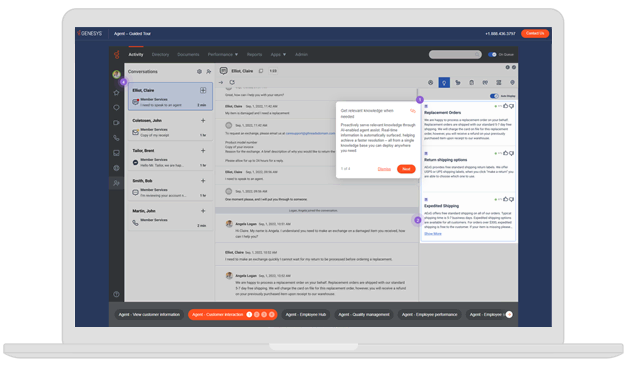
Agent assist tools offer suggestions, summarize conversations and surface knowledge in real time. This helps improve accuracy and accelerate speed to resolution.

Workforce engagement and analytics integration

Contact center performance can improve when you align workforce engagement with customer needs. CCaaS platforms integrate forecasting, scheduling, quality management and performance analytics into one environment. This gives leaders a complete view of operational health.

Analytics reveal patterns in customer interactions. You can identify bottlenecks, track sentiment and make real-time decisions that move service levels forward.

Security, compliance and reliability

Cloud reliability is now stronger than most on-premises deployments. Leading CCaaS providers offer high availability, geographic redundancy and robust security controls. Compliance certifications cover privacy, data protection and industry-specific regulations.

Because updates are automatic, your environment remains current and secure without manual intervention.

Comparing CCaaS platforms

Comparing CCaaS platforms

Must-have capabilities to evaluate

When evaluating CCaaS platform solutions, look for core capabilities that support long-term growth:

  • True omnichannel engagement
  • Native AI for routing, automation and insights
  • Open APIs for integration
  • Workforce engagement management
  • Real-time analytics and reporting
  • Proven reliability and compliance
  • A unified agent desktop

These features ensure you have a foundation that can scale with changing customer and business needs.

CCaaS vs. UCaaS vs. hybrid models

While CCaaS focuses on customer-facing communication, unified communications as a service (UCaaS) manages internal workplace collaboration tools like calling, messaging and meetings. Some platforms combine both models, but many enterprises run them separately to maintain flexibility.

Hybrid models combine on-premises and cloud systems. They can offer short-term stability for teams that need time to migrate. However, hybrid setups add complexity and slow innovation because you maintain legacy infrastructure while adopting parts of the cloud.

How to identify vendor differentiation

Vendor differentiation shows up in four areas:

  • Depth of AI in routing and automation
  • Breadth of omnichannel coverage
  • Built-in WEM and analytics
  • Scale, reliability and global reach

You also want a vendor that prioritizes experience orchestration over simple channel management. A CCaaS platform should coordinate every touchpoint, not just field interactions.

Comparison table: CCaaS, on-premises and hybrid

Capability CCaaS On-premises Hybrid
Scalability High, elastic Limited by hardware Moderate
Updates Continuous Manual upgrades Partial
Cost model Operational Capital Mixed
Innovation speed Fast Slow Moderate
Remote work enablement Built-in Complex Mixed
AI and automation Native Add-on Partial
Reliability Provider-managed IT-managed Shared

Supporting AI-powered CX

How CCaaS supports AI-powered customer experiences

AI routing and self-service enhancements

AI-powered routing matches customers with the right agent or resource based on intent, history and complexity. This can improve first-contact resolution and reduce transfers. Intelligent self-service handles predictable tasks and escalates complex issues with full context.

Predictive analytics and real-time decisioning

Predictive models analyze patterns to forecast outcomes and guide actions. A CCaaS platform uses these models to adjust staffing, route interactions and personalize journeys in real time. This helps improve operational efficiency and customer satisfaction.

Voice and digital bots that scale CX

Voice and digital bots handle routine questions at scale. They collect information, authenticate customers and provide proactive updates. Because these bots connect to your customer service software solution and data, they deliver relevant answers and escalate seamlessly to agents.

Using CCaaS data to personalize every interaction

A CCaaS platform captures data from every interaction. You use this information to personalize conversations, anticipate needs and orchestrate end-to-end experiences. Real-time insights show sentiment, preferences and intent, giving agents context that strengthens engagement.

Integration and technology considerations

Integration and technology considerations

Connecting CCaaS with CRM, WEM and AI systems

Integrations are essential for unified customer journeys. A CCaaS solution connects to customer relationship management (CRM) applications, workforce engagement tools and AI systems so your teams see the full picture. This can eliminate silos and reduce manual work.

Open APIs and extensibility for CX innovation

Open APIs enable businesses to build custom workflows, connect backend systems and extend capabilities. This flexibility supports innovation and lets you incorporate technologies like communications as a service, security tools or industry-specific applications.

Migration strategy: How to move from legacy systems to the cloud

A thoughtful migration strategy reduces risk. Most organizations follow a phased approach:

  • Inventory existing systems
  • Identify quick wins
  • Migrate channels or teams in stages
  • Optimize processes as you move

This approach maintains continuity while accelerating value.

Common challenges and how to avoid them

Common challenges when deploying a CCaaS platform include unclear requirements, siloed data and outdated processes. Avoid these issues by aligning stakeholders, documenting goals and modernizing workflows before migration. Engage technical teams early to ensure integrations meet expectations.

Choosing the right partner

How to choose the right CCaaS partner

Key evaluation questions for CX leaders

When comparing vendors, consider:

  • Does the platform support omnichannel and AI-powered interactions?
  • Can it scale globally?
  • Are WEM, analytics and routing built into the platform?
  • Does the vendor have proven migration experience?
  • Can it support long-term innovation?

Learn more

Signs of a scalable and future-ready platform

A future-ready CCaaS platform supports continuous innovation, open extensibility and natively integrated AI. It delivers resilient global infrastructure and consistent performance across channels. It also gives you visibility into every customer journey and operational process.

Why Genesys stands apart in the CCaaS market

Genesys Cloud™ is the AI-Powered Experience Orchestration platform that unifies channels, data and AI to deliver empathetic, personalized interactions at scale. Organizations use Genesys to accelerate growth, drive efficiency and orchestrate end-to-end experiences that exceed expectations.

Genesys has migrated more than 1,250 customers using one or more legacy platforms onto Genesys Cloud, proving its ability to move companies forward. With continuous innovation, global reach and a unified approach to AI, Genesys sets a new standard for CCaaS platforms.

Measuring success

Measuring success with CCaaS

KPIs to track customer experience improvements

Track KPIs that show the impact of cloud transformation:

  • First-contact resolution
  • Customer satisfaction
  • Wait times and handle times
  • Digital containment
  • Agent productivity
  • Employee engagement

These indicators reveal how well your CCaaS platform supports better journeys and more efficient operations.

How to demonstrate ROI to business stakeholders

The ROI of CCaaS shows up in reduced operational costs, higher customer retention and stronger workforce performance. Show stakeholders how cloud efficiencies reduce infrastructure spending and how automation scales service without adding headcount.

Highlight measurable improvements in loyalty and revenue driven by better experiences.

Using data and reporting for continuous improvement

A CCaaS solution consolidates data from every interaction. Use real-time dashboards to identify trends, adapt staffing and refine workflows. Continuous improvement becomes part of your daily operations as insights reveal opportunities for innovation.

Getting started

Get started with a CCaaS platform

How to build a CCaaS roadmap

A strong roadmap includes:

  • Defining business outcomes
  • Engaging stakeholders
  • Documenting customer journeys
  • Prioritizing channels and features
  • Planning phased migration steps
  • Establishing KPIs and measurement tools

This roadmap ensures alignment and accelerates value.

Conclusion

Conclusion

A modern contact center as a service (CCaaS) platform gives you a powerful way to elevate customer experience, improve efficiency and scale with confidence. By unifying communication channels, AI, workforce engagement and customer data in the cloud, you remove the complexity of legacy systems and gain the agility to move faster. You also create space for innovation as customer needs evolve.

As you evaluate your next step, focus on a platform that supports continuous improvement and orchestrates end-to-end experiences. The right CCaaS solution strengthens loyalty, drives operational value and prepares your teams for the future of customer engagement. With a clear roadmap and the right partner, you can deliver smarter, more connected experiences that move your business forward.

Frequently asked questions

Frequently asked questions about contact center as a service

How is CCaaS different from on-premises contact center software?

Contact center as a service (CCaaS) is cloud-based, meaning the software is hosted by a provider and accessed over the internet. It requires little upfront hardware, scales quickly and is updated automatically, helping organizations deploy new features faster and reduce IT overhead.

On-premises contact center software runs on servers owned and maintained by the organization. It offers more direct control over infrastructure but requires higher capital investment, longer deployment cycles and ongoing maintenance handled by internal IT teams.

What’s the difference between CCaaS and UCaaS?

Contact center as a service (CCaaS) is designed for customer engagement. It focuses on managing inbound and outbound customer interactions across channels like voice, chat, email and social media, with tools for routing, analytics and agent performance.

Unified Communications as a Service (UCaaS) supports internal collaboration. It provides messaging, voice, video meetings and file sharing for employees. While both are cloud-based, CCaaS serves customer-facing teams, whereas UCaaS connects internal users.

What channels does a modern CCaaS platform support?

A modern contact center as a service (CCaaS) platform supports multiple communication channels so customers can engage in the way they prefer. Common channels include voice calls, email, web chat, SMS and social messaging platforms such as WhatsApp, Facebook Messenger and X.

Many platforms also support video, in-app messaging and AI-powered chatbots. These channels are typically unified in a single interface, allowing agents to manage conversations seamlessly and maintain consistent customer experiences.

What features should I look for in a CCaaS platform?

A strong contact center as a service (CCaaS) platform should include omnichannel routing, workforce engagement tools and real-time reporting and analytics. Look for features that help manage call flows, monitor performance and improve agent productivity.

Modern platforms also offer AI capabilities such as chatbots, speech analytics and intelligent routing. Integration with CRM systems, strong security and flexible scalability are equally important to support growth while maintaining reliable, personalized customer experiences.

Does CCaaS include AI and automation capabilities?

Yes, most modern contact center as a service (CCaaS) platforms include built-in AI and automation features. These tools help handle routine tasks, reduce wait times and improve overall efficiency.

Common capabilities include AI-powered chatbots, virtual agents, intelligent call routing and speech or text analytics. Automation can also support self-service, quality management and agent assistance by providing real-time insights. Together, AI and automation help contact centers deliver faster, more consistent and more personalized customer experiences.

How long does it take to migrate to a CCaaS platform?

The time required to migrate to a contact center as a service (CCaaS) platform varies based on complexity, size and integration needs. Smaller or less complex contact centers may complete migration in a few weeks.

Larger organizations with multiple channels, custom workflows or legacy integrations may require several months. Migration typically includes planning, configuration, testing and agent training. A phased approach is often used to reduce risk and ensure business continuity during the transition.

What are the common challenges when moving to CCaaS?

Common challenges when moving to a contact center as a service (CCaaS) platform include integrating with existing systems, migrating data and redesigning workflows. Organizations may also need to address network readiness and security requirements.

Change management is another key challenge. Agents and supervisors must be trained on new tools and processes, which can impact productivity in the short term. Careful planning, clear communication and phased deployments help reduce disruption and ensure a successful transition.

How should CX leaders compare CCaaS vendors?

CX leaders should compare contact center as a service (CCaaS) vendors based on functionality, reliability and long-term fit. Key factors include omnichannel support, AI capabilities, analytics, security and ease of integration with existing systems.

It is also important to evaluate scalability, global availability and vendor support. Leaders should review deployment options, pricing models and service-level agreements. Customer references and product roadmaps can provide insight into how well a vendor will support evolving CX strategies.

What makes a CCaaS platform scalable and future-ready?

A scalable, future-ready contact center as a service (CCaaS) platform is built on a cloud-native architecture that can easily grow with business demand. It should support rapid onboarding of agents, flexible licensing and global deployment without major infrastructure changes.

Future-ready platforms also offer open APIs, strong integrations and continuous updates. Built-in AI, automation and analytics enable ongoing optimization, while high availability and security ensure the platform can adapt to new channels, technologies and customer expectations.

Learn more about CCaaS platforms and solutions

Migrate to contact center as a service with Genesys Cloud

Elevate your customer experience and build innovatively with a top CCaaS solution in the Genesys Cloud platform. Connect with us today and see how the right CCaaS solution can help your business scale with ease while serving your customers better.

Thank you for your interest.

We’ll contact you directly to set up a date and time that works with your schedule.