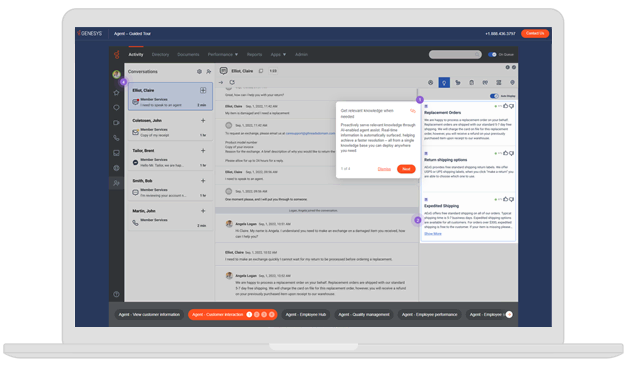
An agentic system is any AI-powered system that shows “agency” by perceiving its environment, processing information and taking actions to meet defined goals. They blend automation, data insights and event-driven logic to proactively make decisions and solve problems without continuous human oversight. An agentic system can operate freely, solving dynamic, non-deterministic problems and executing without relying on rigid, predefined paths. In a customer experience context, an agentic system can streamline workflows, improve outcomes and free human agents to focus on more complex tasks or those that require a human touch.
“As AI agents become more capable, enterprise connectivity is becoming a strategic requirement, rather than a technical implementation detail. AI agents need a consistent way to discover tools, access information and take action across enterprise systems while maintaining governance and control.”
Mike Szilagyi, SVP, GM Product Management, Genesys
Agentic system use cases for enterprises
Customer experience automation
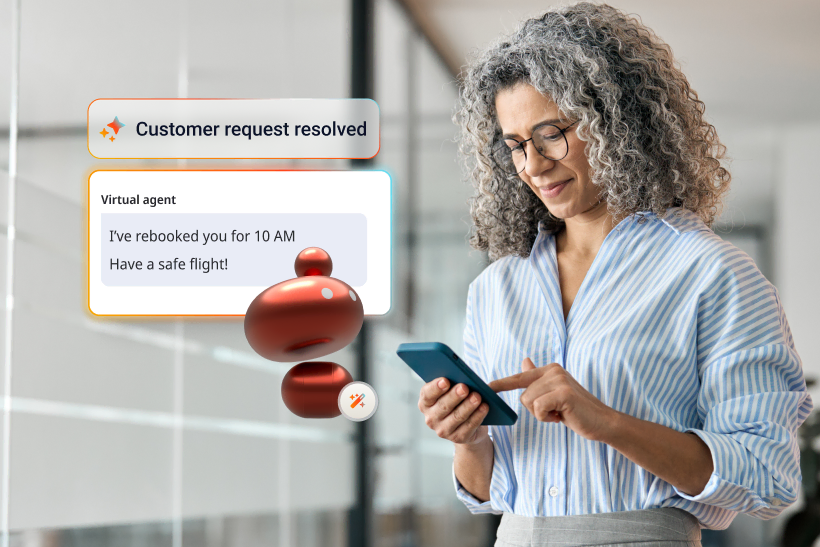
Agentic systems power agentic virtual agents that perceive customer intent, pull relevant data and take action — resolving inquiries, processing requests and personalizing interactions across channels without constant human oversight.
Dynamic workflow orchestration
Rather than following rigid, predefined paths, agentic systems adapt in real time to changing conditions by rerouting tasks, triggering approvals and coordinating across departments to keep complex business processes moving efficiently.
Intelligent contact center operations
In customer experience environments, agentic systems streamline routing, workload distribution and escalation decisions. By handling non-deterministic scenarios autonomously, they free human agents to focus on interactions that genuinely require a personal touch.
Fraud detection and risk response
Agentic systems can continuously monitor transactions and behavioral signals, identify anomalies, and take immediate protective actions like flagging accounts, blocking transactions or triggering reviews, all without waiting for human intervention at each step.
Supply chain and operational optimization
By ingesting real-time data from across the business, agentic systems can detect disruptions, forecast demand shifts and autonomously execute responses like reordering inventory or rerouting shipments, reducing costly delays and manual decision-making.