Your Genesys Blog Subscription has been confirmed!
Please add genesys@email.genesys.com to your safe sender list to ensure you receive the weekly blog notifications.
Subscribe to our free newsletter and get blog updates in your inbox
Don't Show This Again.
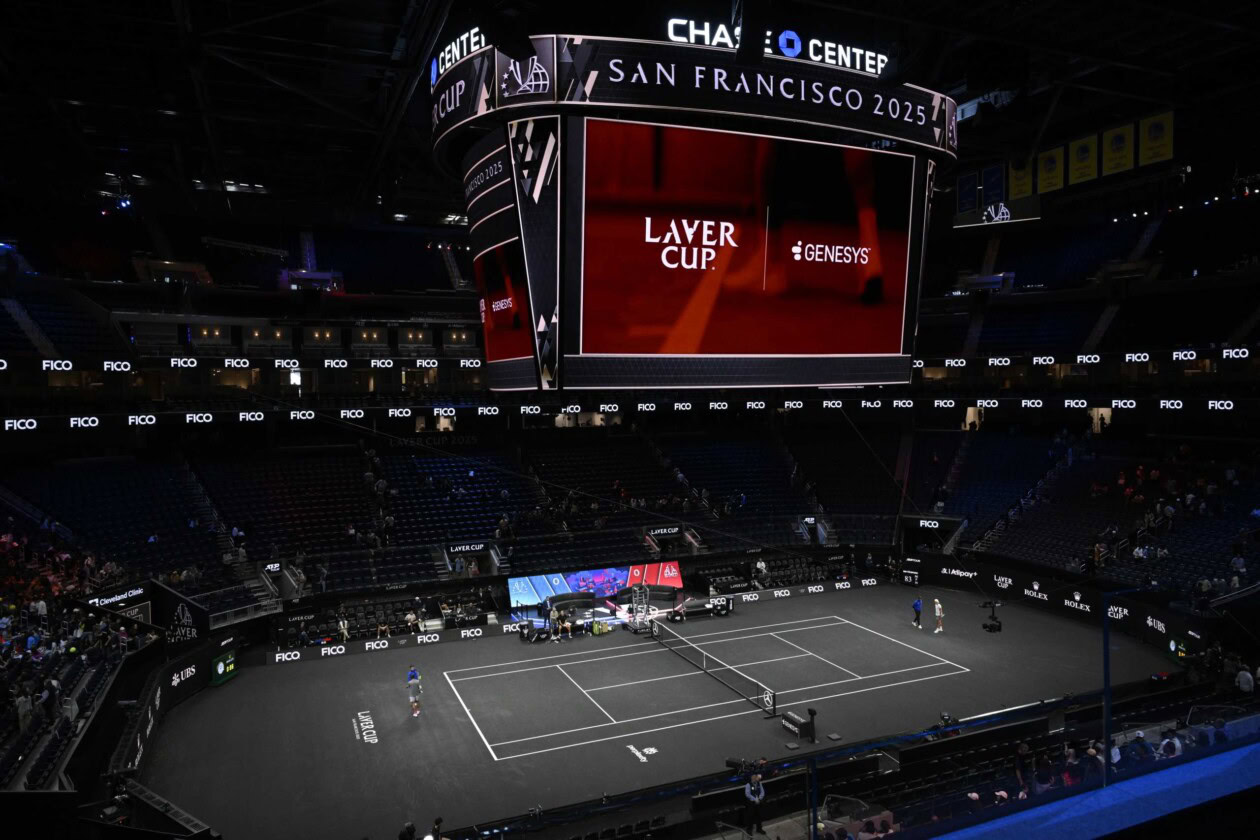
The difference between good and great tennis players isn’t simply skill. It’s understanding.
At the highest levels of competition, every player has access to information. They know the score. They see the court. They understand the stakes.
What separates elite players is their ability to interpret what’s happening around them.
They recognize patterns. They anticipate momentum shifts. They understand what matters in a given moment — and how to act on it. In other words, they have better context.
Organizations face a similar challenge.
Today, businesses have more customer data than ever before. But data alone doesn’t create better experiences. What matters is the ability to connect information, understand customer needs and act with confidence in real time.
That’s why reaching the next level of experience isn’t simply about collecting more information. It’s about turning information into understanding.
The Laver Cup offers a unique perspective on this challenge. Beyond the action on the court, team captains must constantly interpret changing conditions, understand how individual players respond under pressure and adapt their guidance in real time. Success depends not just on having information, but on understanding what it means in a given moment.
They observe tendencies. They test strategies. They look for signals that reveal strengths, weaknesses and opportunities. Whether on the court or on the sidelines, success depends on turning those observations into something more valuable: context.
For tennis legend and Laver Cup Team World Captain Andre Agassi, that ability to recognize patterns is central to success.
“The game is all about patterns and dynamics,” he explains.
Today’s athletes have access to more data than ever before. But the best players don’t rely on data alone.
“I like to use data to confirm what it is I’m seeing,” says Agassi.
That distinction is important. Data provides information. Context creates understanding.
The same is true in customer experience.
Organizations are surrounded by customer signals — interactions, purchases, service conversations, digital behavior and operational data. When those signals remain disconnected, teams are left reacting to individual events rather than understanding the broader journey.
The next level of experience begins when organizations can connect those signals and see the bigger picture.
Every great tennis player learns to make better decisions as a match unfolds. They move beyond reacting to individual points and develop a deeper understanding of how the match is evolving.
Organizations follow a similar path.
Many businesses still make decisions one interaction at a time. A service request is handled. A problem is resolved. A transaction is completed.
It’s leading organizations that are moving beyond isolated interactions and toward orchestrated experiences.
By connecting data, journeys and AI, they gain the context needed to understand not only what is happening, but why it is happening and what should happen next.
This shift represents a new level of maturity.
Instead of responding to disconnected moments, organizations can coordinate actions across the customer journey, anticipate needs and continuously improve experiences over time.
The result isn’t simply faster decisions. It’s better decisions.
As AI becomes more capable, much of the conversation focuses on automation.
The real opportunity is understanding.
AI can help organizations identify patterns, surface recommendations, and connect signals that would otherwise remain hidden.
In doing so, it provides something every decision-maker needs: context.
As a leader in agentic AI that orchestrates real-time customer experiences, Genesys helps organizations connect customer data, journeys and intent to create a more complete understanding of every interaction.
That understanding enables teams to act with greater confidence, consistency and speed.
The goal isn’t to replace human judgment. It’s to make human judgment more informed.
Even in a sport increasingly influenced by analytics, human understanding remains essential.
Laver Cup Team Europe Captain Yannick Noah believes success under pressure depends on understanding the individual.
“You have to know the person you’re talking to because you don’t have the same energy with every player.”
Every athlete is different. Every situation is different. Every conversation requires context.
Customer experience is no different.
Customers don’t want generic interactions. They want experiences that reflect their unique needs, preferences and circumstances.
That’s why the future of customer experience isn’t AI versus humans. It’s AI helping humans understand customers more deeply and respond more effectively.
Trusted AI provides the context. People provide the empathy, judgment and connection. Together, they create experiences that are both more intelligent and more human.
The best tennis players don’t win because they have more information than everyone else. They win because they understand what that information means.
Organizations that reach the next level of experience take the same approach.
They move beyond disconnected data and isolated interactions. They connect signals across journeys. They turn information into context. And they use that understanding to make better decisions for customers, employees and the business.
Because in tennis — and in customer experience — the next level isn’t about knowing more.
It’s about understanding more.
Learn more about Genesys sponsorship with Laver Cup: https://www.genesys.com/lavercup
 Genesys
Genesys empowers organizations of all sizes to improve loyalty and business outcomes by creating the best experiences for their customers and employees. Through Genesys Cloud, the AI-Powered Experience Orchestration platform,...
Subscribe to our free newsletter and get blog updates in your inbox.