Your Genesys Blog Subscription has been confirmed!
Please add genesys@email.genesys.com to your safe sender list to ensure you receive the weekly blog notifications.
Subscribe to our free newsletter and get blog updates in your inbox
Don't Show This Again.
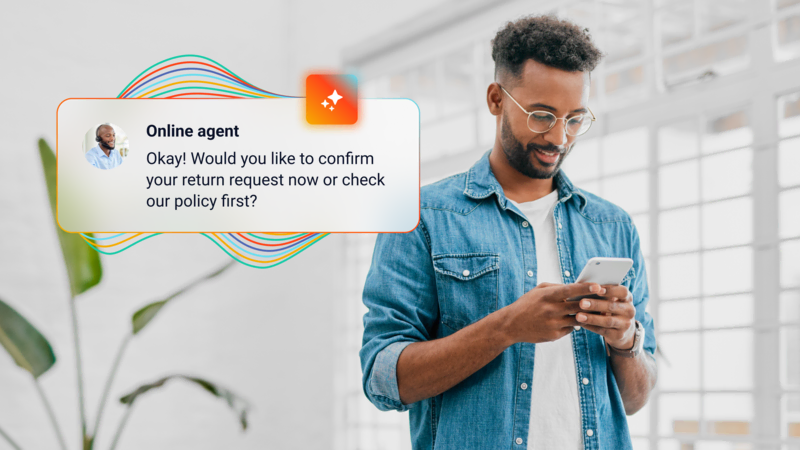
A customer messages a brand on WhatsApp to reschedule a delivery. Ten minutes later, she asks about a billing charge — same thread, no repeating herself, no transfer to another team. That’s not just a channel. That’s a conversation. And it’s why customer engagement is entering a new phase.
For years, organizations have invested in more channels: phone, email, chat, social, messaging and more. But customers don’t think in channels. They think in outcomes.
They want to resolve an issue, reschedule an appointment, verify a transaction, check a claim, get advice or complete a task — quickly, conveniently and in the environment that feels most natural to them. Increasingly, that environment is asynchronous, mobile-first and conversational.
That’s why WhatsApp on the Genesys Cloud™ platform represents more than the addition of another digital channel. It reflects a broader shift toward AI-enabled engagement that blends messaging, voice, context and human expertise into effortless customer journeys.
This creates a powerful opportunity for enterprises to move beyond a channel strategy and toward a true conversation strategy.
Enterprises often think about engagement through the lens of technology: Which channels do we support? Which systems are connected? Which workflows are automated?
Customers see it differently. They want the easiest path to resolution.
In many moments, that means interacting with a brand the same way they communicate in their personal lives: through simple, persistent, mobile messaging. WhatsApp gives customers a familiar place to engage with brands on their own time, whether they’re responding to a proactive notification, asking a question, sharing information or escalating to a live conversation.
But the real value comes when that interaction is connected to the broader customer journey. A WhatsApp conversation shouldn’t be isolated from voice, AI, routing, analytics, CRM data or agent context. It should become part of an orchestrated experience that helps customers move from intent to outcome.
“The challenge isn’t connecting WhatsApp. Many providers can do that. The challenge is orchestrating everything around the conversation: knowing when AI should engage, when a human should step in, and connecting customers to the right resource at the right moment without losing momentum,” said Danielle MacLean, Senior Director of Product Management at Genesys.
For many enterprises, WhatsApp is becoming a new front door for customer engagement.
A customer might start in WhatsApp to ask a service question, respond to a marketing offer, get product guidance, manage an appointment, check loyalty benefits, verify their identity or resolve an issue. In each case, the customer might interact with a different business function: customer service, marketing, sales, scheduling, loyalty, authentication or support.
This sequence of interactions can create a new challenge for enterprises. If a customer begins by responding to a promotion, then asks a product question, then needs help completing a purchase or verifying an account, the conversation should continue naturally. The customer should not have to restart, repeat information or move into a disconnected experience simply because the interaction crossed an internal boundary.
This is where WhatsApp on Genesys Cloud can create broader value. It gives organizations a way to treat WhatsApp not just as an inbound or outbound messaging channel, but as an entry point into connected, orchestrated customer journeys — where AI, routing, agent context, voice escalation and analytics work together to help the customer move from intent to outcome.
Traditional contact center models were built around synchronous engagement. A customer calls. An agent answers. The interaction begins and ends in a defined window of time.
Asynchronous engagement works differently. A customer might start a conversation, pause, return later and expect the brand to remember the context. A virtual agent might contain the initial interaction, but a human agent might need to step in. A proactive message might turn into an inbound service conversation. A messaging exchange might escalate into a voice call.
That flexibility is powerful, but it also changes how enterprises need to think about operations.
They must consider new questions:
These are questions that go beyond technology and address operational transformation. Answering these questions is exactly where businesses can unlock value.
Many organizations underestimate what it takes to operationalize messaging at enterprise scale. Enabling WhatsApp is only one part of the equation.
To make messaging work across the enterprise, organizations need routing, orchestration, AI, compliance, workforce operations, analytics, CRM context and the ability to escalate across engagement types. They need a way to connect virtual and human agents. They need insight into performance. And they need confidence that the experience can scale securely and reliably.
That is the difference between consumer messaging and enterprise-grade engagement.
WhatsApp on Genesys Cloud brings the channel into a broader experience orchestration platform that can support AI-powered engagement, seamless transitions between digital and voice, predictive routing, agent context and analytics. Instead of treating WhatsApp as a standalone touchpoint, enterprises can make it part of a connected customer engagement strategy.
For businesses, the opportunity goes beyond simply “turning on WhatsApp.” It’s about redesigning customer engagement by determining where WhatsApp can create the most value within their customer journeys.
That starts with use case strategy. Enterprises can identify moments where mobile-first, asynchronous engagement can improve convenience, reduce friction or accelerate resolution. Examples could include:
Businesses can also rethink workflows and staffing models. A voice-first contact center adding WhatsApp as a first digital channel might need a different operational approach than an enterprise already managing multiple digital channels. Some organizations might need dedicated digital teams. Others might need blended queues. And some might need guidance on when and how to escalate from automation to a live agent, or from messaging to voice.
And as AI becomes a larger part of the engagement model, enterprises can operationalize conversational AI, deploy virtual agents, design automation flows and ensure human agents are supported with the context they need.
The strongest WhatsApp stories will be grounded in practical, outcome-oriented use cases.
Imagine a financial services customer receives a proactive WhatsApp message about suspicious activity on a credit card. The customer verifies the transaction, asks a follow-up question and is routed to the right advisor if human support is needed. The interaction remains contextual, secure and connected — without forcing the customer to restart the conversation in another channel.
Or consider an appointment-based business that uses WhatsApp to proactively notify a customer about a scheduling change. The customer can confirm, reschedule or ask for help in the same conversation. WhatsApp also creates a strong environment for AI-powered engagement because conversations are naturally structured, contextual and persistent. AI can resolve routine requests, collect information, guide customers through processes and determine when human expertise is needed. When escalation occurs, agents inherit the full context of the conversation rather than forcing customers to start over.
These examples show why WhatsApp on Genesys Cloud is about designing journeys that are persistent, contextual, AI-friendly and outcome-driven.
“WhatsApp already has more than 100 million users in the United States, and globally it has become a major point of presence for financial services engagement — including informational, service and transactional experiences,” said Gordon Sexton, Global Design Lead for the Banking Industry at Genesys. “When you put those realities together, the message is clear: this model is expanding, and financial services organizations in the U.S. should be paying attention.”
Three forces are converging to shape customer engagement:
WhatsApp sits at the center of these forces.
It gives customers a familiar, mobile-first way to engage. It gives AI a persistent, conversational environment where context can build over time. And it gives enterprises a new entry point for redesigning journeys around intent, outcomes and orchestration.
The future of customer engagement won’t be organized around channels. It will be organized around conversations. Customers will move without friction between AI, messaging and human expertise. Interactions will persist across time and channels. Journeys will adapt dynamically based on customer intent.
WhatsApp on Genesys Cloud helps enterprises take the first step toward that future. And for businesses looking to deliver modern customer experience, this represents a significant opportunity to help customers rethink engagement for the next decade.
Discover how the WhatsApp business integration on Genesys Cloud can deliver enterprise customer engagement with AI-powered orchestration and automation.
 Joya Mannan
Joya Mannan, Ph.D., leads Global Partner Marketing Communications at Genesys, where she shapes the vision, voice, and strategy that drives engagement and growth across the global partner ecosystem. With more...
Subscribe to our free newsletter and get blog updates in your inbox.