Your Genesys Blog Subscription has been confirmed!
Please add genesys@email.genesys.com to your safe sender list to ensure you receive the weekly blog notifications.
Subscribe to our free newsletter and get blog updates in your inbox
Don't Show This Again.
Everyone has been on the customer side of a support call. You explain the problem once, get transferred and explain it again to someone who doesn’t have the context to understand the challenge you’re facing.
What feels like one frustrating interaction to you is a completely different picture behind the scenes – one that can involve dozens of systems that were never built to talk to each other.
There’s a gap between how a customer experiences a problem and how the business behind it processes one. That gap is becoming harder to ignore in the experience economy. Customers increasingly expect every organization to deliver the kind of consistent, personalized experiences they know are possible.
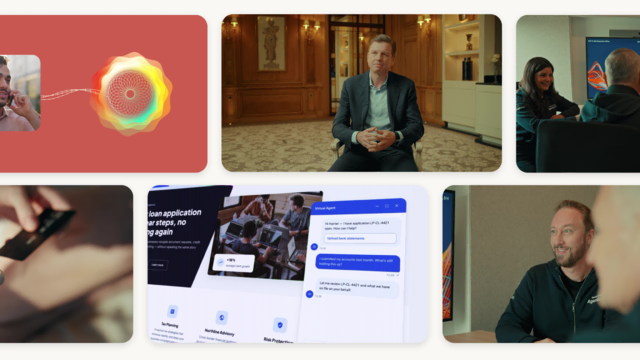
It’s also at the heart of the “Great Customer Expectations” episode of Threads of Connectivity, a mini-documentary series on National Geographic global digital platforms. The episode brings together Genesys leaders, Virgin Atlantic and independent experts to explore how AI, data and cloud are changing what’s possible for customer experience.
As Genesys Chairman and CEO Tony Bates explains during the episode, “You’re not just comparing the best experience in, say, one industry like healthcare or another industry like travel. You’re actually comparing your best experience across every single one of those industries.”
That comparison is now the baseline for every customer expectation. The real question is why customers are holding every organization to it in the first place.
It’s easy to assume customers have simply become more demanding. But Louise Phillips, VP of Customer Centers at Virgin Atlantic, offers a different perspective.
“It’s not that customers are more demanding, they just are more cognizant of what is possible.”
Consider an airline disruption. A customer sees a cancellation, delay or lost bag as one problem. Behind the scenes, Phillips explains, it can represent “hundreds, if not thousands of decisions being made at once.”
Customers shouldn’t have to understand that complexity. They expect the organization to understand what happened and help make it right.
The opportunity here is to make the complexity behind the experience invisible.
Making that complexity invisible takes more than adding AI to individual touchpoints.
It requires experience orchestration — connecting people, systems, data and interactions so organizations can shape experiences in real time that are both efficient and empathetic. Agentic AI takes that opportunity further. Unlike AI designed primarily to respond to prompts or follow predefined workflows, agentic AI can reason, plan and take action toward a goal.
“That’s not a chatbot. That’s a goal-seeking system. It’s a planning system, and they’re very, very different in what you can build,” said Glenn Nethercutt, EVP, Chief Technology Officer, Genesys.
For customers, that shift shows up in something simple: getting help in their own words, without translating their problem into the system’s language.
“That experience of being able to have an AI agent reason through what you’re trying to solve in your native language is transformational,” said Elcenora Martinez, SVP of Product Management at Genesys.
With the right context and orchestration behind it, AI can move beyond providing a better answer to helping achieve an outcome — connecting information and coordinating action to reduce effort required from the customer.
The next evolution could change something even more fundamental: who acts first.
Customer service has traditionally been reactive. When something goes wrong, the customer recognizes it and reaches out for help. Agentic AI creates the potential to reverse that dynamic.
Bates asks us to imagine an organization recognizing an issue and resolving it proactively — “without you even needing to know about it.”
It marks a shift from reacting to customer needs to anticipating intent and orchestrating the right outcome in real time.
And it doesn’t make the human role less important.
Phillips describes the Virgin Atlantic approach as using AI to “expand human capability” — surfacing information faster, reducing repetitive work and making personalization possible without losing empathy or human judgment.
The goal is to use technology to navigate complexity throughout a customer journey — while creating more space for people to bring empathy and judgment to the moments where they matter most.
The next level of customer experience will be defined by how little friction customers feel and how well they feel understood.
CX leaders see the answer in orchestration – connecting the systems and data behind an experience, so customers never have to bridge the gap themselves.
Customers won’t have to repeat themselves, get transferred to someone new or start over. The organizations that get there first will have it handled before anyone thinks to reach out.
Download “The State of Customer Experience” report from Genesys to find out how customer expectations have changed, how CX leaders are responding and what organizations need to win in the agentic era.
 Genesys
Genesys® empowers more than 8,000 organizations worldwide to create the best customer and employee experiences. Genesys Cloud™ is the Agentic Orchestration Platform that securely connects people, systems, data and AI...
Subscribe to our free newsletter and get blog updates in your inbox.