Your Genesys Blog Subscription has been confirmed!
Please add genesys@email.genesys.com to your safe sender list to ensure you receive the weekly blog notifications.
Subscribe to our free newsletter and get blog updates in your inbox
Don't Show This Again.

AI is transforming customer experience. That much is clear.
Organizations are using AI to automate routine interactions, help employees work more efficiently and deliver faster, more personalized experiences. And as AI agents become increasingly capable of taking action on behalf of customers and employees, the possibilities continue to expand.
But there’s another transformation happening behind the scenes.
As AI takes becomes more capable, it changes the organization. Responsibilities that once belonged entirely to people begin to shift. Existing roles evolve. New ones emerge. And operating models designed around an entirely human workforce start to come under pressure.
In other words, AI doesn’t just change customer experience. It changes the work behind customer experience and, eventually, how the business operates.
Much of the conversation around AI in CX has understandably focused on what the technology can do. Can it automate an interaction? Help an employee find an answer? Summarize a conversation? Predict what a customer needs next?
But as AI becomes more deeply embedded in CX operations, a different set of questions starts to emerge.
If an AI agent handles an interaction, who determines what it can and can’t do? How do you evaluate whether it performed well? How do you identify when an interaction was technically correct but still created a poor customer experience? Who decides when a human should step in?
And who continually improves the system as customer expectations, business priorities and AI capabilities evolve?
These aren’t simply technology questions. They’re questions about work, ownership, decision-making and accountability.
Organizations have spent years optimizing customer journeys. Now, many will need to think just as carefully about redesigning the organizations behind them.
At first, organizations can often absorb AI into their existing structures.
An operations team takes responsibility for a new AI use case. Quality teams begin reviewing AI-generated interactions alongside human ones. Managers add monitoring and improving AI performance to a growing list of responsibilities. Governance is handled by a cross-functional group alongside existing work.
That can work — until the scale and complexity increase.
As AI becomes involved in more customer journeys, organizations face more decisions about performance, escalation, quality, governance, training and optimization. And the traditional boundaries between teams can become increasingly difficult to maintain.
Is AI performance an operations responsibility or a technology responsibility? Should quality teams evaluate only human employees or AI agents as well? Who designs a conversation when the customer might interact with a virtual agent, a human employee or both during the same journey?
There’s no single operating model that answers those questions for every organization. But the underlying challenge is increasingly common: As businesses grow, complexity can outpace the operating model built to support them. AI can help organizations manage that complexity, but it also changes how work gets done, introducing new responsibilities, decisions and ways of working. You can’t build an AI-powered future indefinitely on an operating model designed for a pre-AI world.
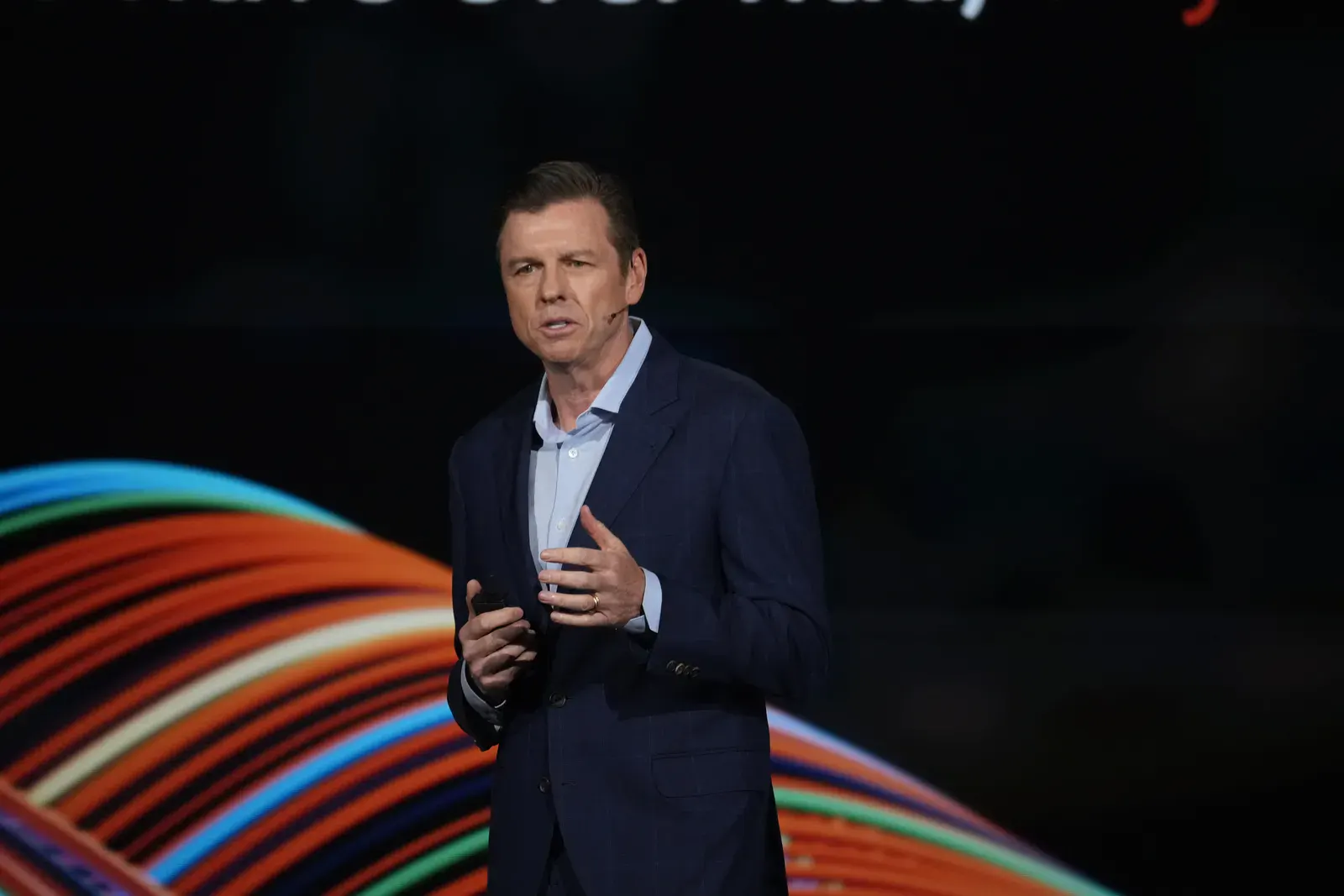
At Xperience 2026 in Las Vegas, Genesys Product Marketing Manager Yulia Kaurova led a breakout session exploring how AI is reshaping the CX workforce, including the new responsibilities and roles that could emerge as organizations adopt AI at scale.
That’s where the conversation about emerging CX roles becomes particularly interesting. Roles such as AI performance manager, conversation designer, prompt engineer and human-in-the-loop orchestrator offer examples of how the work could evolve. The titles themselves may change — or never exist in some organizations. What matters is what sits beneath them: responsibilities that organizations increasingly need someone to own.
An AI performance manager, for example, might monitor how AI performs against customer, operational and business outcomes, identifying patterns and opportunities for improvement.
A conversation designer might shape interactions across human and AI touchpoints so that experiences remain coherent, useful and aligned with the organization’s brand.
Prompt engineers or AI experience specialists can help translate business objectives, policies and knowledge into the instructions and structures AI needs to perform effectively.
And human-in-the-loop orchestrators can help determine when AI should act independently, when human judgment is needed and how work should move between the two.
Some of these responsibilities will become part of existing jobs. Others might be distributed across several teams or develop into entirely new roles. Starting with responsibilities rather than titles also helps organizations avoid designing tomorrow’s workforce around today’s assumptions about AI.
The more important shift is in the work itself.
That shift also creates an opportunity to rethink how existing CX roles create value.
Consider supervisors and quality teams. In a traditional operating model, a significant amount of their time can be spent manually reviewing interactions, checking compliance or identifying relatively routine performance issues.
AI can take on more of that analysis at scale. But that doesn’t make human expertise less valuable. It can make the uniquely human parts of the role more important.
Instead of spending as much time finding the signal, people can spend more time deciding what the signal means and what to do about it. Their work can shift toward calibration, coaching, exception handling, judgment and process improvement.
The same pattern can appear elsewhere in the organization. As AI takes on more repeatable tasks, people can focus more of their attention on ambiguity, empathy, creativity and accountability.
That’s why the future of the CX workforce isn’t simply a story about replacing human work with AI. It’s about redistributing work according to what humans and AI each do well.
That evolution is already beginning to appear in real-world CX organizations.
One example explored during the Xperience session was Brazil’s DM. Rapid growth through acquisitions saw the business double in size twice in two years, creating new layers of operational complexity. That created a need to think beyond technology alone and reconsider how work was structured, managed and improved.
The specifics of DM’s approach aren’t a blueprint for every organization. Nor should they be. Every company has a different mix of customers, channels, technology, regulatory requirements and organizational structures.
What matters is the broader pattern.
As AI changes the work, organizations eventually have to reconsider how that work is managed. And the earlier they recognize that shift, the more deliberately they can respond to it.
So where should CX leaders begin? Not necessarily with a new org chart.
Before creating a collection of AI-themed job titles, start by understanding how responsibilities are changing.
Here are some questions to consider:
Those questions make it easier to see where the organization actually needs to change.
Some new responsibilities might fit naturally into existing roles. Others could require employees to develop new skills. And where the work is sufficiently different or important, entirely new roles might make sense.
Organizations don’t need to have the future of work completely figured out before they begin. But they do need an operating model that can evolve as AI takes on a greater role in CX.
That starts with identifying high-value workflows and asking where AI can create measurable value. It means establishing clear guardrails around the decisions AI can make and where human judgment remains essential. And it means defining how people and AI will work together — including who owns performance, quality, escalation and continuous improvement.
Just as importantly, it’s critical to align on the business outcomes the organization is trying to achieve. Responsible adoption doesn’t mean applying AI to every piece of work simply because it’s possible. Running AI broadly without clear criteria can introduce unnecessary cost and complexity. The goal is to apply it where it improves outcomes, then build the operating model needed to support it.
The organizations best prepared for an AI-driven future won’t necessarily be the ones that deploy the most AI tools or automate the fastest. They’ll be the ones that deliberately decide what machines should do, what people should do and how the two can work together effectively.
Because AI changes the work before it changes the org chart.
Don’t wait until complexity forces change. Design your CX organization before it starts redesigning itself.
 Tom Huston
Tom Huston is a Thought Leadership Marketing Lead at Genesys whose work has long focused on the intersection of emerging technologies and customer experience.
Subscribe to our free newsletter and get blog updates in your inbox.