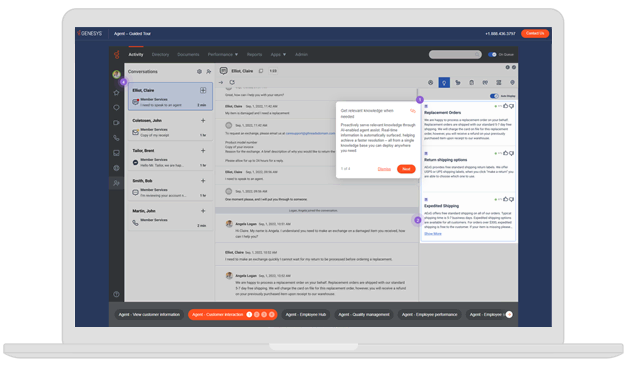
Modernizing operations through cloud migration for call centers
Legacy call centers create challenges in scalability, maintenance and reliability. Cloud migration for call centers allows enterprises to move from hardware-heavy infrastructure to flexible, cloud-delivered capabilities. A hosted call center reduces IT burden, accelerates updates and enables rapid deployment of new channels. This transition improves agility and supports ongoing customer experience (CX) transformation.
Expanding omnichannel customer engagement capabilities
Customers expect seamless support across voice, chat, messaging, email and social channels. A hosted call center provides the framework for unified routing and interaction management across all channels. Enterprises use these tools to eliminate silos, maintain consistent context and deliver smooth omnichannel customer engagement throughout the customer journey.
Scaling service capacity during fluctuating demand
Seasonal spikes and unexpected surges strain fixed-capacity systems. Hosted call centers scale quickly without new hardware or long lead times. Enterprises apply elastic capacity to maintain service levels, support peak-volume events and deliver reliable customer support even during major disruptions or promotional bursts.
Improving operational efficiency with centralized management
Distributed call center environments are difficult to maintain and update. Hosted call centers centralize administration through cloud-based tools for routing, reporting and agent management. Enterprises use this consolidation to reduce maintenance overhead, streamline workflows and standardize experiences across locations.
Enhancing disaster recovery and business continuity
On-premises systems are vulnerable to outages or local disruptions. Hosted call centers provide built-in redundancy, geographic failover and continuous availability. Enterprises rely on these protections to ensure uninterrupted customer service and safeguard critical engagement operations.