Accelerating cloud migration and modernizing legacy infrastructure
Many enterprises operate with aging systems that limit innovation. A cloud contact center removes hardware constraints and introduces continuous updates, elasticity and rapid deployment. Organizations use cloud migration for contact centers to reduce IT overhead and unlock omnichannel engagement. This shift enables faster rollout of new experiences and improved operational resilience.
Delivering consistent omnichannel engagement
Customers expect seamless transitions across voice, chat, email and messaging. A cloud-based contact center unifies interaction routing and customer history across every channel. Enterprises use these capabilities to reduce fragmentation, strengthen service continuity and deliver connected journeys. This improves satisfaction and reduces customer effort across touchpoints.
Improving workforce engagement and operational efficiency
Distributed teams require flexible, real-time tools. A cloud contact center streamlines forecasting, scheduling and performance management while enabling remote and hybrid work. Enterprises use a Contact Center as a Service (CCaaS) platform to optimize staffing, improve coaching and strengthen employee experience. This leads to better service delivery and more engaged teams.
Scaling quickly to meet fluctuating demand
Seasonality, promotions and unexpected spikes strain fixed-capacity systems. Cloud contact centers scale instantly to support surges in volume. Enterprises use CCaaS models to maintain service levels during peak periods without long-term infrastructure costs. Elastic capacity ensures stability and reduces customer wait times.
Enhancing experiences with AI and analytics
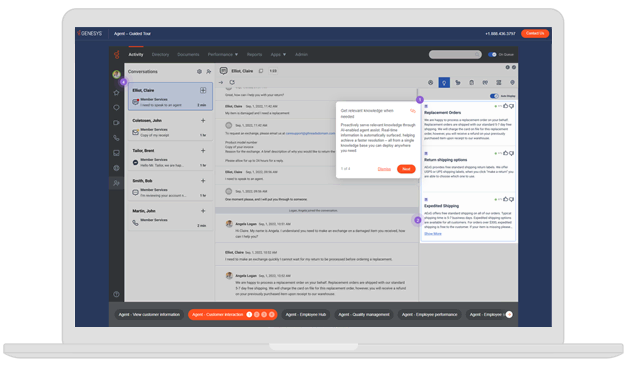
Modern contact centers rely on data to personalize service and drive automation. A cloud contact center integrates AI-powered routing, real-time analytics and automation across interactions. Enterprises apply these insights to improve self-service, strengthen routing accuracy and deliver more empathetic experiences.