Improving service quality through real-time operational oversight
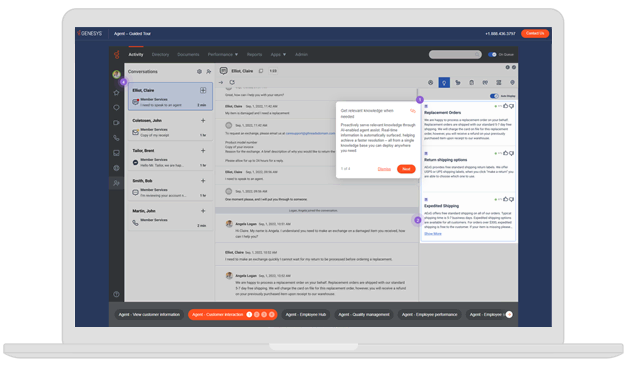
Enterprises must balance service levels across fluctuating interaction volumes. Call center management enables supervisors to monitor queues, agent activity and performance indicators in real time. Organizations use these insights to adjust staffing, prioritize interactions and ensure customer expectations are met consistently across channels.
Optimizing workforce performance with structured processes
Agents need clear workflows, coaching and tools to perform at their best. Contact center management incorporates quality evaluations, targeted coaching and performance metrics that help guide development. Enterprises apply these practices to improve agent efficiency, increase engagement and deliver higher-quality customer experiences.
Strengthening routing accuracy to reduce customer effort
Misrouted interactions create frustration and increase handle times. Call center management uses intelligent routing, skills-based assignments and data-driven logic to direct customers to the right resource immediately. Enterprises rely on these strategies to reduce transfers, enhance first-contact resolution and improve overall satisfaction.
Enhancing operational efficiency with analytics and reporting
Leaders need visibility into trends that impact performance and cost. Call center management brings together analytics across channels, enabling deeper insight into customer behavior, agent efficiency and bottlenecks. Enterprises use these insights to refine processes, forecast demand and drive continuous improvement.
Supporting omnichannel engagement with unified oversight
Customers interact across phone, chat, email and messaging. Contact center management provides centralized visibility into all channels, ensuring consistency in service delivery. Enterprises use this unified approach to maintain high-quality engagement no matter where or how customers reach out.








![Resource thumb [benify]](https://www.genesys.com/media/resource-thumb_Benify.webp)