Creating consistent experiences across devices and modalities
Customers expect fluid movement between mobile apps, web interactions and voice channels. Multiexperience (MX) enables organizations to design journeys that maintain context across these environments. Enterprises apply MX to reduce friction, improve satisfaction and ensure customers receive the same quality of engagement no matter how they connect.
Supporting evolving customer behaviors with flexible interaction models
Customer preferences shift rapidly as new technologies emerge. MX lets enterprises add new interaction types such as messaging, smart speaker commands or visual interfaces without disrupting existing journeys. This adaptability helps organizations meet customers where they are and future-proof their experience strategy.
Enhancing agent support through unified interaction data
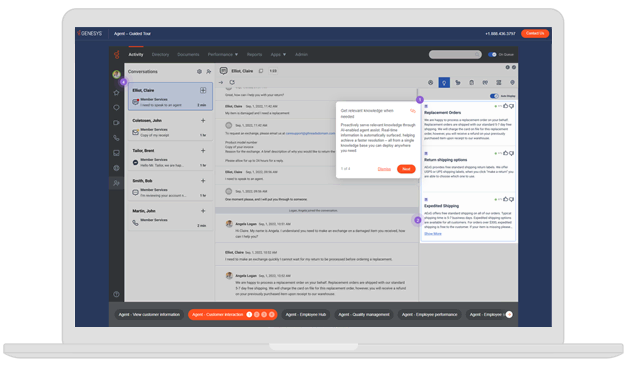
Agents often struggle when customer history is fragmented across tools. Multiexperience (MX) ensures that interaction context, preferences and past activity follow the customer across devices. Enterprises use MX to give agents a complete picture of the journey, improving resolution accuracy and reducing customer effort.
Accelerating digital transformation through design consistency
Digital modernization efforts stall when experiences are inconsistent across departments or platforms. MX provides a structured framework for designing user flows, interfaces and interactions holistically. Enterprises apply MX to unify their digital footprint, strengthen brand perception and drive faster innovation.
Improving accessibility and inclusivity across interactions
Not all customers prefer or can use the same interaction methods. Multiexperience (MX) supports alternative modalities, including voice navigation, text-based inputs and multimodal interactions. Enterprises use MX to ensure accessible and inclusive experiences that reach broader audiences.