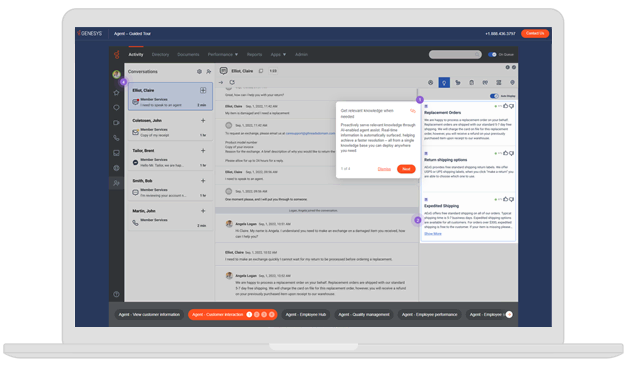
Improving employee experience with digital workforce engagement
Enterprises often struggle to keep dispersed teams connected and motivated. Artificial intelligence (AI)-driven workforce engagement tools provide real-time coaching, performance insights and collaboration features that support all employees regardless of location. Organizations use these capabilities to strengthen culture, boost productivity and ensure every agent receives the same level of support.
Optimizing operations with AI scheduling and forecasting
Managing staffing levels across remote and on-site environments is complex. AI scheduling and forecasting analyze historical patterns, real-time demand and agent preferences to create accurate schedules for hybrid teams. Enterprises apply these models to improve service levels, optimize labor spend and ensure the right skills are available at the right time.
Building a resilient hybrid workforce strategy
Shifts in customer expectations and labor markets require more adaptable staffing approaches. A hybrid workforce strategy aligns policies, communication and technology across locations to create a consistent employee experience. Enterprises use this strategy to scale efficiently, support flexible work and maintain continuity in times of change.
Creating a cohesive hybrid work environment
Hybrid environments can introduce friction when tools and processes vary by location. A unified hybrid work environment provides consistent access to applications, knowledge and engagement channels. Enterprises apply this model to reduce operational gaps, support cross-team collaboration and deliver a more seamless experience for customers and employees.
Enhancing customer experience through flexible staffing models
Customer demand fluctuates throughout the day and across channels. Hybrid workforce models allow organizations to shift staffing dynamically between remote and on-site teams. Enterprises use this flexibility to improve omnichannel responsiveness, close skill gaps and maintain high-quality service as customer needs evolve.