




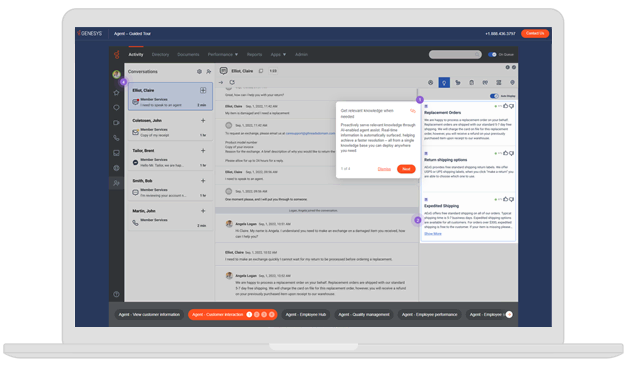

Making interactions smarter with natural language processing
Every customer interaction matters. A single conversation can determine whether a customer becomes a loyal advocate or decides to leave for a competitor. In today’s digital-first world, customer service happens across channels — phone, email, live chat and social media. With expectations rising, businesses must find new ways to respond quickly and personally.
This is where natural language processing (NLP) steps in. By combining computer science and artificial intelligence (AI), NLP helps companies understand and respond to customers in real time. Using NLP in customer service means every interaction can feel more natural, more helpful, and more human.
What is natural language processing (NLP) in customer service?
Defining NLP and its core concepts
Natural language processing is a field of AI that enables computers to understand, interpret and generate human language. Think of it as teaching machines how to “listen” and “talk” in ways people naturally communicate.
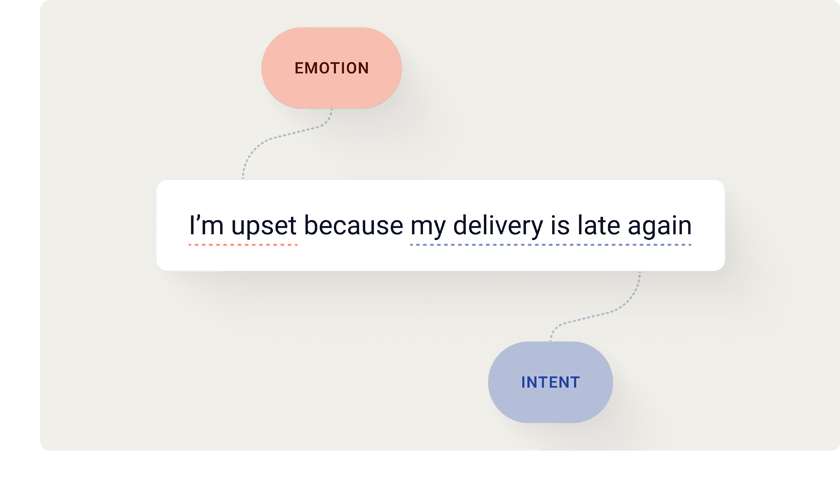 Unlike simple keyword matching, NLP can infer intent and context, intent and even sentiment in a message. It breaks down text or speech into components such as part of speech tags, sentence structure and sentiment to help uncover what the customer actually wants.
For example, if a customer types, “I’m upset because my delivery is late again,” NLP can infer both the intent (a delivery issue) and the detect negative sentiment (frustration). This allows the system to provide the right solution faster and with empathy.
How NLP differs from traditional automation
Traditional customer service automation often depends on scripts and decision trees. These systems route customers based on predefined keywords or rigid workflows. While useful, they don’t adapt well to variations in language or unexpected questions.
NLP-powered AI models, on the other hand, learn from vast sets of training data. They can recognize context, adapt to new phrasing and generate natural-sounding responses. Instead of a customer getting stuck in a loop because they didn’t type the “right” word, NLP tools understand intent and guide the conversation forward. This creates more fluid, accurate and human-like exchanges.
Key benefits of using NLP in customer service operations
Enhancing response speed and efficiency
 One of the clearest advantages of NLP is speed. AI-driven tools can process customer requests instantly, cutting wait times and reducing the need for manual handling of routine inquiries. Questions like “What’s my account balance?” or “How do I reset my password?” can be answered in seconds.
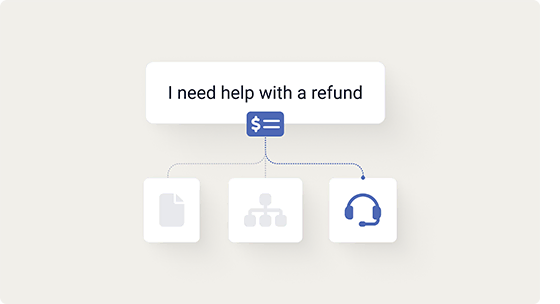
NLP also improves efficiency by routing queries to the right place. For example, if a customer says, “I need help with a refund,” NLP can recognize the request and automatically forward it to the refund process — whether that means a self-service article, an automated workflow or a live agent.
By handling simple tasks automatically, NLP helps free up human agents to tackle more complex or high-value issues. This balance reduces workload stress while increasing overall productivity.
Personalizing the customer experience
Customers expect interactions to be tailored to their needs. NLP combined with CRM and customer data enables this level of personalization by analyzing customer history, intent and emotional cues. With sentiment analysis, natural language processing can detect when a customer feels frustrated and escalate the case to a skilled agent. At the same time, it can recognize opportunities for cross-selling or upselling by spotting interest in related products.
This personalized interaction makes customers feel heard and valued. Over time, this builds trust and loyalty, which are essential for long-term business growth. NLP transforms service from transactional to relational, helping turn one-time interactions into lasting connections.
Popular NLP techniques for automating customer support
Sentiment analysis and emotion detection
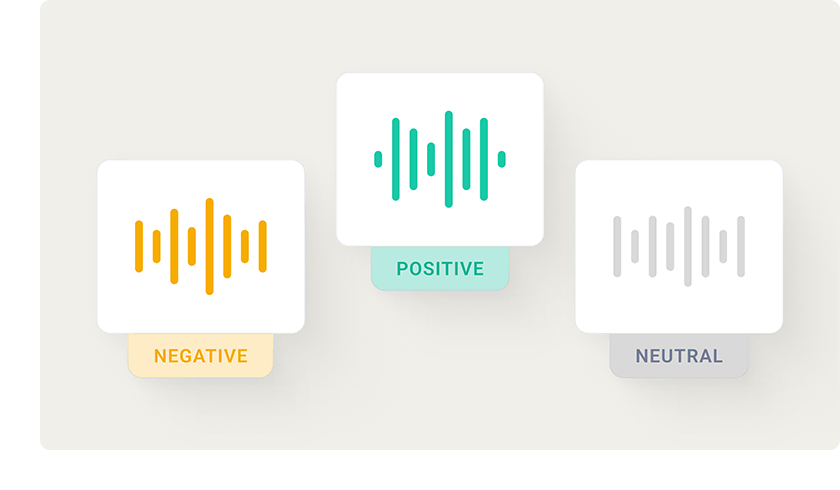 Sentiment analysis allows AI systems to evaluate the tone of customer messages. Is the person happy, upset or neutral? Emotion detection goes even deeper by estimating emotional categories such as anger or satisfaction, with varying degrees of confidence. These insights are powerful tools for prioritizing and tailoring responses.
For example, if NLP detects negative sentiment in a support email, it can flag the case for urgent attention. Or if a customer sounds pleased after a resolution, the system can prompt a follow-up survey to capture positive feedback. By matching responses to emotional tone, businesses can resolve issues more effectively and improve customer satisfaction.
Natural language understanding and generation
Natural language understanding enables AI to extract meaning and intent from customer queries. For instance, when someone writes, “Why was I billed twice last month?” the system identifies the intent (a billing problem) and the context (a duplicate charge). Natural language generation (NLG) then allows the system to create human-like responses, such as “I see you were billed twice, let me correct that” and trigger appropriate workflows, such as initiating a refund process.
NLU and NLG work together to create conversations that feel authentic. Instead of robotic replies, customers receive answers that are more clear, accurate and empathetic. This combination makes AI conversation tools far more effective at managing both simple and complex service interactions.
Addressing challenges of implementing NLP solutions
Handling complex or nuanced inquiries
While NLP is powerful, it’s not perfect. Sarcasm, slang and industry-specific terms can confuse even advanced AI systems. Complex issues that involve multiple steps or require creative problem solving are still best handled by human agents or next-generation virtual agents.
To address this, companies should design systems that recognize their own limits. When NLP tools encounter a situation beyond their scope, they should seamlessly transfer the customer to a live representative without disruption.
Continuous training is also critical. Feeding NLP models with updated data — including transcripts, customer reviews and past interactions — helps them grow smarter over time. The better the training data, the better the AI’s ability to understand and respond accurately.
Integration with existing customer service systems
Introducing NLP into customer service requires smooth integration with existing infrastructure. This includes customer relationship management (CRM) systems, ticketing platforms and knowledge bases. If the tools aren’t connected, valuable context may be lost, leading to disjointed experiences.
Businesses can overcome this challenge by using robust APIs and taking steps to ensure NLP systems are aligned with existing workflows. Regular monitoring and optimization also help ensure the AI continues to deliver value without creating bottlenecks.
Emerging trends and the future of NLP in customer service
Multilingual and voice-powered conversational AI
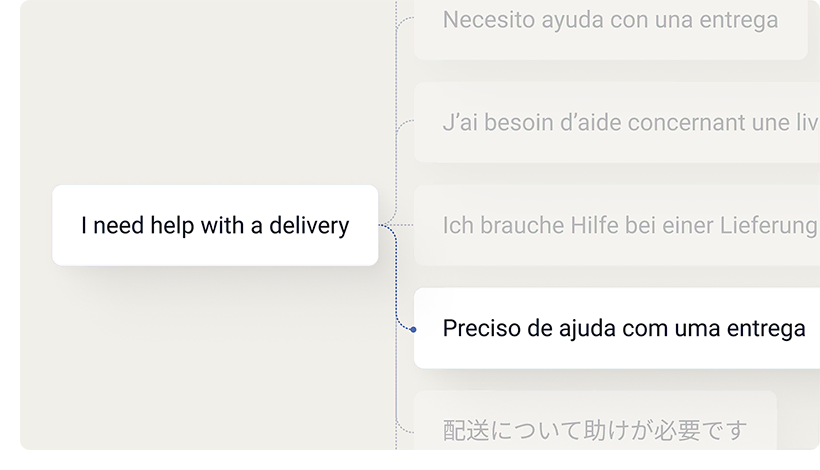 Customer bases are global, and language should never be a barrier to service. Multilingual NLP systems allow companies to engage customers across regions by automatically detecting and translating languages. Whether a customer speaks English, Spanish or Mandarin, the service experience can remain consistent.
Voice-powered conversational AI is another major trend. Instead of typing messages, customers can speak naturally to virtual assistants. This technology mirrors real-world interactions and makes service more accessible — especially for those who prefer talking to typing.
Looking ahead, NLP will continue to evolve toward more seamless, human-like communication. As models become more advanced, businesses will increasingly rely on NLP not only for service but also for proactive engagement, supporting more proactive engagement based on patterns in customer behavior and language before customers even articulate them.
Conclusion
NLP is reshaping customer service. By allowing AI technologies to understand, interpret and generate human language, businesses can deliver experiences that are faster, more accurate and more personal. The result is stronger customer relationships and greater operational efficiency.
Adopting NLP in customer service is not about replacing human agents. It’s about empowering them. By handling routine interactions and recognizing customer emotions, NLP tools give human representatives more time to focus on complex and meaningful conversations. Together, AI and human agents create a customer experience that is efficient, empathetic and future-ready.
Frequently asked questions
Can NLP-powered chatbots fully replace human customer service agents?
No. NLP-powered chatbots are excellent for routine interactions, but they cannot replace the empathy, creativity and problem-solving ability of human agents. Instead, they work alongside human teams to handle repetitive tasks while agents focus on more complex conversations.
How does sentiment analysis through NLP improve customer satisfaction?
Sentiment analysis detects customer emotions in real time. By identifying frustration, confusion or happiness, companies can adapt their responses and prioritize urgent cases. This reduces friction, increases trust and improves overall satisfaction.
What are best practices for successfully integrating NLP tools in customer service?
- Start with high-volume, routine interactions
- Use high-quality training data for accurate AI understanding
- Connect NLP tools with CRMs, ticketing systems and knowledge bases
- Continuously monitor and refine models based on results
- Enable seamless escalation to human agents when needed