




The new era of service recovery
Even the best-run organizations encounter service failures. A missed product or service delivery, an incorrect charge, a delayed response — each can damage trust. But how a company responds in these moments often matters more than the mistake itself. That’s the essence of service recovery.
As customer expectations rise and digital interactions multiply, traditional recovery processes are no longer fast or flexible enough. Businesses now face a strategic imperative: adopt AI-powered service recovery solutions that not only resolve issues efficiently but restore loyalty and enhance the overall customer experience.
This article explores how AI is transforming the service recovery process — from real-time complaint detection to predictive retention strategies — and outlines a framework for integrating automation into your customer service recovery plan.
Understanding service recovery and its importance
Defining service recovery in the modern business landscape
Simply put, service recovery refers to the actions a business takes to address and resolve service failures — from identifying the issue and offering a resolution to following up with the customer. In a landscape where unhappy customers can voice dissatisfaction instantly and across channels like social media, service recovery must operate with precision, informed by context, guided by data and calibrated to the specific customer affected.
Why service recovery matters for brand loyalty and profitability
Handled well, complaint management and issue resolution become loyalty drivers. Customers who experience a good service recovery often become more loyal than those who never encountered an issue at all, a phenomenon known as the service recovery paradox.
Effective service recovery reduces churn, boosts customer lifetime value and supports overall profitability. It’s not just good customer service; it’s good business.
The link between service recovery and retaining customers
Ultimately, customer retention is built on trust. When companies respond to issues with speed, clarity and empathy, they can turn dissatisfaction into satisfaction — and even advocacy. In contrast, a slow or impersonal response increases the risk of churn and reputational damage.
Many organizations lack the visibility and orchestration needed to act quickly and personally when things go wrong. This gap leaves frontline teams unable to consistently turn service failures into loyalty-building moments.
The role of AI in enhancing service recovery
What makes AI an effective tool for service recovery
In essence, AI helps deliver faster, smarter and more consistent recovery. It can detect issues in real time, personalize outreach and automate resolution, all while learning from past interactions. Natural language processing, machine learning and sentiment analysis make it possible to move from reactive to proactive complaint handling.
AI vs. traditional service recovery approaches
Traditional recovery relies on customer support teams, often constrained by volume, inconsistency and time. AI augments their capabilities, enabling real-time triage, automated messaging and intelligent escalation paths — improving both efficiency and experience.
Building digital trust through AI-driven interventions
And when used transparently, AI can help create loyal customers. Customers appreciate fast, relevant and fair responses — especially when it’s clear how decisions are made. Responsible AI builds digital trust through consistency, clarity and ethical data practices.
Key elements of a successful service recovery program with AI
Proactive issue detection and resolution
To put this into practice, a successful AI-powered service recovery plan typically includes several key components. The first is being able to spot issues early, before they compound. AI-powered tools monitor digital channels for signs of dissatisfaction, enabling teams to respond before customers reach out. This reduces inbound customer issues, complaint volume and protects loyalty.
Personalized communication driven by AI
A sincere apology feels personal. AI tailors recovery messages based on existing customer history and preferences, helping businesses respond with relevance and respect. Tone, timing and channel are also optimized to suit each customer’s context.
Predictive analytics for anticipating customer needs
AI can identify customers likely to churn based on behavioral patterns or unresolved past issues and trigger preemptive engagement. This shifts recovery from reactive firefighting to strategic customer retention.
Integrating AI with CRM and customer support systems
To be effective, AI must be embedded in core systems. Integration with CRM and support tools ensures visibility across teams and consistent responses across touchpoints. The result is a more cohesive, intelligent customer service strategy.
Steps to manage service failures using AI
When service failures do occur, businesses can apply AI to help customers feel heard and understood.
Automated apologies and compensation offers
Certain failures — like late shipments or billing errors — have clear resolutions. AI can automatically trigger apologies, refunds or vouchers, delivering fast and fair outcomes without manual intervention.
Escalation paths and human oversight in AI workflows
Not all problems can be resolved by bots. AI can determine when human intervention is needed based on issue complexity or customer sentiment, enabling more empathetic and appropriate recovery efforts.
Monitoring and measuring recovery outcomes
AI also supports performance tracking. Key metrics include resolution time, sentiment change, CSAT and retention rates. These insights help refine your customer service recovery process over time.
AI models and service recovery
The role of generative AI in handling complex issues
Generative AI will become increasingly adept at crafting nuanced responses and help agents communicate with greater empathy. When used wisely, even today, it enhances the human touch and reduces response time.
Predictive service recovery and preemptive retention strategies
AI will get even better at spotting problems before they surface, such as a surge in delivery complaints or billing anomalies. It will be able to trigger automated interventions to reduce customer churn.
In the future, you can expect more real-time orchestration, deeper personalization and tighter integration between service teams, sales and marketing. AI models will continue to shape how businesses respond to (and prevent) customer dissatisfaction.
Using AI to win back customers after a service issue
Rebuilding trust with AI-powered follow-ups
Recovery doesn’t stop at resolution. Businesses must follow through to rebuild trust and loyalty. AI can automate follow-up messages to check in, share updates or request feedback — reinforcing care and rebuilding trust.
Delivering consistency in recovery efforts
AI can also help ensure that all customers receive fair and timely responses, reducing variability in how recovery is handled across teams or regions. This helps protect brand reputation and improves overall service quality.
Leveraging customer feedback to strengthen AI models
Feedback loops power continuous improvement. AI analyzes complaint trends, survey results and outcome data to refine its models, making future recovery efforts smarter and more effective.
Three common mistakes to avoid when automating service recovery
1. Over-reliance on bots without human oversight
Of course, automation isn’t foolproof. While automation can help boost efficiency, outcomes depend heavily on the type of AI being used.
Basic bots can handle simple recovery actions, but without contextual understanding and emotional intelligence, they risk escalating frustration rather than resolving it. Selecting AI that can recognize nuance — and knowing when to hand off to a human — is critical to protecting trust during service recovery.
2. Failing to adapt solutions to customer needs
Second, AI systems must reflect customer diversity and context, with humans-in-the-loop to make sure bias doesn’t start to creep in. And personalization matters. Overly rigid rules or one-size-fits-all responses can make matters worse, not better.
3. Neglecting data privacy and transparency
Third, trust depends on openness. Customers should know when they’re interacting with AI, how their data is used and how to reach a real person if needed. Responsible AI should be transparent.
What this means for CX leaders
Service failures are inevitable, but poor service recovery doesn’t have to be. In a high-stakes experience economy, how a company responds should be defined in its customer retention strategies.
AI enables faster, fairer and more consistent recovery, from real-time complaint detection to proactive outreach and follow-up. Businesses that embed AI into their customer service recovery plan can gain a critical advantage: the ability to turn negative moments into opportunities for loyalty and growth.
The path to satisfied customers isn’t perfection; it’s recovery done right.
Frequently asked questions
How does AI improve customer retention after service failures?
AI helps companies identify, resolve and follow up on service issues quickly and consistently. By reducing friction and personalizing recovery efforts, AI-driven systems restore trust and increase customer retention rates.
What are some real-world examples of AI-driven service recovery?
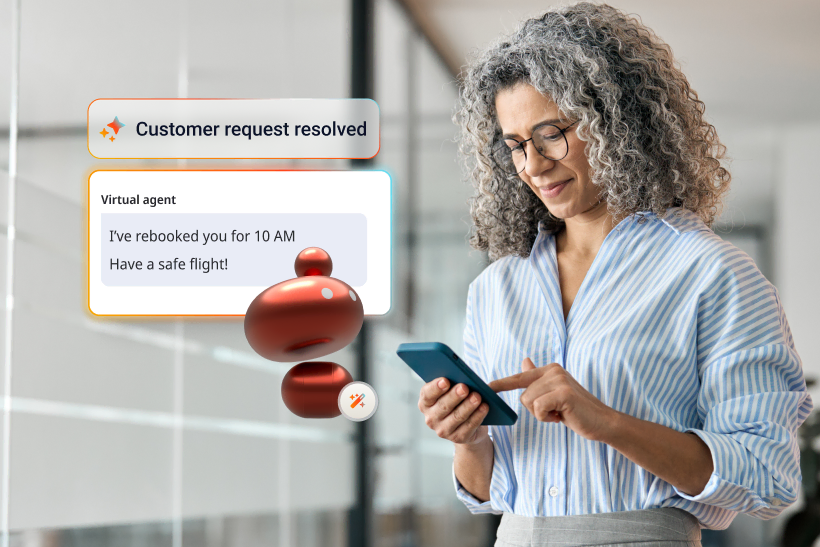
Many airlines now use AI to detect delays and automatically send apologies or compensation. Ecommerce platforms flag late deliveries and issue vouchers before customers complain.
Banks and fintech apps use AI to spot failed or duplicate transactions in real time and proactively notify customers, often reversing fees or credits instantly. These proactive measures prevent escalation and help build loyalty.
How can healthcare organizations integrate AI for service recovery?
Healthcare providers can use AI to monitor patient feedback, flag dissatisfaction and send personalized follow-ups after appointments. AI also helps route complex cases to the right teams faster, improving patient experience.
What metrics should businesses track to measure AI’s impact on service recovery?
Key metrics include resolution time, customer satisfaction (CSAT), net promoter score (NPS), first-contact resolution rate, sentiment shift and long-term retention of previously dissatisfied customers. Businesses should also track containment or deflection rates for AI-handled recovery cases, cost per recovery interaction and escalation rates to human agents.
Monitoring recovery speed versus severity of the issue helps assess whether AI is being applied appropriately. Finally, comparing pre- and post-recovery customer behavior, such as repeat purchases, churn risk or complaint frequency, provides insight into whether AI-driven recovery is genuinely rebuilding trust rather than just closing tickets.
How can AI balance automation with the human touch in recovery efforts?
AI balances automation with the human touch by taking on the right parts of service recovery — the moments where speed, consistency and accuracy matter most — while intentionally preserving human involvement where judgment, empathy and nuance are required. Automation can quickly acknowledge issues, gather context and trigger corrective actions. It also keeps customers informed in real time, reducing frustration that silence or delays might cause.
At the same time, effective recovery models are designed to recognize emotional intensity, ambiguity or high business impact. They can then seamlessly escalate those cases to skilled agents.
This requires AI that can interpret intent, sentiment and customer history — not just follow scripts — and operate within hybrid workflows where humans remain in the loop. When customers understand what’s happening and why, the experience feels supportive rather than automated. The result is a recovery process that’s efficient, personalized and creates loyalty.