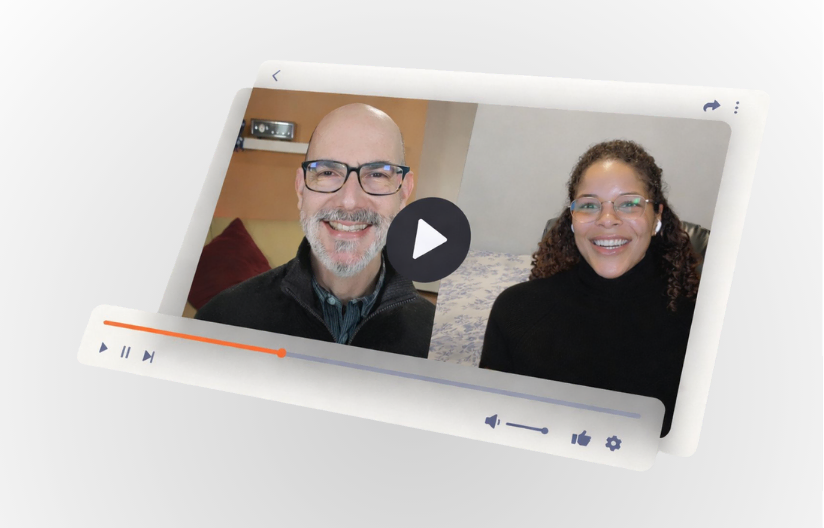
Your Tech Talks in 20 Podcast Subscription has been confirmed!
Please be sure to whitelist @email.genesys.com to ensure you receive Genesys emails.
December 16, 2025 – Duration 00:14:36
Recognizing that their customers deserve seamless experiences across every touchpoint, Banco Promerica El Salvador is evolving from managing 12 separate vendor systems to building a unified platform that fulfills their promise of relationship banking at scale. In this episode, Enrique Argueta explains how Banco Promerica El Salvador is reimagining the customer experience across nine countries and serving over one million customers. Discover how this innovative regional bank is setting new standards in financial services by blending the personal touch customers value with cutting-edge automation and AI capabilities.
Want to listen more?
Subscribe to our free newsletter and get updates in your inbox on new episodes released each week!
Subscribe to our free newsletter and get new episode updates in your inbox



Enrique Argueta
Director of Retail Banking and Branches at Banco Promerica, El Salvador
As Director of Retail Banking and Branches at Banco Promerica El Salvador, Enrique Argueta leads the teams powering one of the country’s largest financial service networks –from branches and premium banking to call centers, telemarketing, payments, and remittances. Since joining the bank, he’s reshaped its cloud migration strategy into a unified omnichannel vision, consolidating fragmented systems and improving visibility across the customer journey.
Hello and welcome to Level Up CX Tech. I’m Marissa Gbenro.
And I’m Michael Logan.
In each episode, we delve into the most pressing issues, opportunities, and challenges in customer experience right now and how you can use CX technology to see real business value.
And today we’re joined by Enrique Argueta, from Banco Promerica to talk to us a little bit about their migration to the cloud.
Hi, Marissa. Hi, Michael. I’m Enrique Argueta, Director of Retail Banking and Branches at Banco Promerica.
We’re really happy to have you as well. Can you tell us a little bit about your role with Banco Promerica and a bit about the company itself?
Absolutely. Banco Promerica El Salvador is part of Grupo Promerica, a regional financial group present in nine countries around Central America, the Caribbean, and Ecuador. Altogether, we manage around $24 billion in assets and serve close to 4 million customers through more than 600 branches and 1500 ATMs.
I lead the retail banking business at Promerica El Salvador, and that includes our branch network, premium banking, mortgage development unit, non-branch channels, like the contact center, telemarketing, and external sales, as well as payments and financial networks, which cover our acquiring business, remittances, and financial agents. I also oversee the customer experience training and development, which pretty much ties everything together around one goal—helping our customers move forward and grow stronger financially.
Enrique, when you joined Banco Promerica, you’d learned that they were doing a cloud migration, but an as-in-migration. So, multiple systems that weren’t necessarily talking to each other. What was the moment you realized, a straight lift and shift wasn’t enough? And how did you reframe the business case towards a unified architecture?
I joined the bank around one year ago, and to me, it was a very pleasant surprise that they were running on Genesys, but the on-prem version and migrating towards the cloud version. As I was going through the different units, I realized that only the contact center and collections were under the Genesys ecosystem. But telemarketing was on another telephony platform. And then you have other channels, such as chatbots and WhatsApp being run by different vendors.
None of them really talked to each other. We had the typical scenarios where recording was inconsistent, updates were manual, and frankly, we had very little visibility into the customer journey. We were spending more time managing technology than managing relationships. We went ahead and reframed the business case around a unified platform. We wanted fewer vendors, simpler governance, and better insight for both our people and our customers.
I think that today pretty much we’re not really talking about technology limitations, but how we will use technology to deliver on a promise of relationship banking at scale.
Enrique, I know this isn’t your first cloud platform implementation. It’s one of a few. What have you learned from previous implementations, and what are you most excited about where CX technology is now and what it’s making possible in the future?
This is my second time around. The first time, we had to build everything from scratch. This second time around, I was very fortunate to be able to find out that most of these services had already been exposed, for other channels through APIs, and that accelerates the process of implementation. And it allows us to start thinking about the other types of benefits that we can gain from the platform as well. And how we can orchestrate all of this to be able to understand where the different statuses of customer inquiries or services are.
And I feel that’s a great example of true orchestration. When things can talk seamlessly to backend systems, with Genesys. In a previous conversation, you mentioned that you’re using automation and self-service to handle simple inquiries like account balance, and that frees up your human agents for more complex areas when dealing with customer inquiries. How are you think about this redevelopment of human resources and what new opportunities does that create for both employees and customers?
I think one of the biggest advantages is that we have many different channels to serve our customers. Right? However, these channels were really not integrated. And therefore, again, we had very little visibility.
In the end, most of the customer inquiries, which were simple inquiries, like what’s my account balance, what’s my credit card due date, and how much is the minimum payment? They’re very simple and we’re looking at leveraging technology to be able to answer those inquiries for customers. I believe it’s very beneficial for customers as well to have those available for them 24-7. Then we can actually focus our staff on handling more complex inquiries or services that are required by our customers. Therefore, we know that we’re going to have additional capacity to refocus or redeploy into other areas of the business that we see an opportunity there. Such as the remittance business, our acquiring business, as well as our financial agents or correspondents.
Enrique, rather than a big bang, it sounds like you prefer to stage functionality in line with progress. What would you say is your playbook for piloting a capability, validating the business assumptions that led to investing in those capabilities, and deciding whether to scale it, and if it’s working? Also, if it makes sense to implement it across teams?
There’s so much available now, and the potential of Genesys is so big that you are really tempted to want it all at once. But in the end, sustainable transformation requires discipline. We go step by step. We start by walking, running, and then flying.
Each pilot starts with a clear business case and measurable goals. We test, adjust, validate, and only then do we expand. When we transitioned our contact center from the on-prem version to the cloud in May. We didn’t launch everything at once. We focused on service level first, and the results were immediate. Abandonment rates dropped by around 30%, and customer satisfaction improved. I think that those early wins gave us the confidence and the funding to keep scaling. My message to my team is simple – prove it works, measure the impact, and then accelerate.
You mentioned that Banco Promerica’s core principle is relationship banking. How do you balance that personal touch with the need for efficiency and scale, especially when competing against larger banks?
I think relationship banking is really at the heart of who we are. Our goal is to help customers move forward and grow stronger financially, always with the customer first approach. We do that through the four pillars, everyday banking, lending, investment, and protection. Our customers are able to reach us through many channels. But I think that once we go with the omnichannel strategy, it will let us see and understand those interactions as one continuous conversation. Imagine a customer starting a chat online and then visiting a branch, and we already know the context. That’s where true relationship banking meets scale.
I believe that by integrating self-service and assisted service, we’re giving our customers flexibility while our agents are focusing on empathy and solutions. We’re a group that’s present in nine countries, and Genesys Cloud has been chosen as the enterprise-wide solution. Each country has the flexibility to adapt based on its own market. Speed and autonomy are the real advantages compared to larger, perhaps more bureaucratic institutions for us to adapt and be there for our customers.
Banking is personal and important to everyone. Money is extremely personal and quite important, and we expect to know our balance as soon as we log on. As soon as we reach out, whether it’s fraud or you need a balance transfer or you need access in a different country, you want that to be instantaneous. So what does success look like in 2 to 3 years for Banco Promerica? How do you plan to measure the success of your digital transformation and its impact on the relationship banking key pillars?
I guess success for me over the next few years should be simple to describe but more challenging to execute. Success is achieving true omnichannel integration, when a customer can start a conversation on one channel and continue it seamlessly on another with full visibility of the journey. It’s when our self-service operations handle routine needs, and our agents are able to focus on complex interactions. Our technology is anticipating customer intent using AI and sentiment.
But in the end, success isn’t just technology, it’s outcomes as well. Improved processes, faster time to market, stronger SLA adherence, a more engaged workforce, lower attrition, higher empathy scores, measurable improvements in NPS, and first contact resolution. Ultimately, success is when customers feel that every interaction with Promerica, no matter the channel, feels human, consistent, and valuable. I believe that’s the benchmark we’re building towards.
With managing $4 billion in assets and over 4 million customers. You’re the perfect person to ask the next question. If I’m a financial institution looking to level up my CX, What is your best advice that you can give to that organization for a successful transformation?
I’ve always been a big supporter of adopting technology. I think that my best advice can be, you know, start now.
I’ve seen the same challenges across many industries – legacy systems, standalone applications, limited visibility, and fragmented reporting. None of us are really unique in that. The difference comes from mindset. Technology is really advanced faster than ever. The longer you wait, the harder it’s going to catch up. One of my biggest recommendations is partner with the right experts. we were talking about this with colleagues from other institutions during the Genesys Xperience this year, Genesys, in our case, is helping us accelerate by bringing the best practices that have already been tested around the world. Most of what you need probably is already out there? So learn from it, adapt it to reality, and keep improving,
That is great advice.
So many great takeaways I was really thinking of when you said, learn from your tests and adapt it to your reality. That is phenomenal.
Enrique, thank you so much for joining us today and sharing your expertise and strategies with us. I know our audience is going to find it so invaluable. Thank you to our audience for listening. And if you like this podcast, please subscribe, and you’ll get the next one in your feed. Also, visit genesys.com to learn more about how you can level up your CX. Until next time, thank you for listening to Level Up CX Tech.