Your Tech Talks in 20 Podcast Subscription has been confirmed!
Please be sure to whitelist @email.genesys.com to ensure you receive Genesys emails.
December 1, 2025 – Duration 24:57
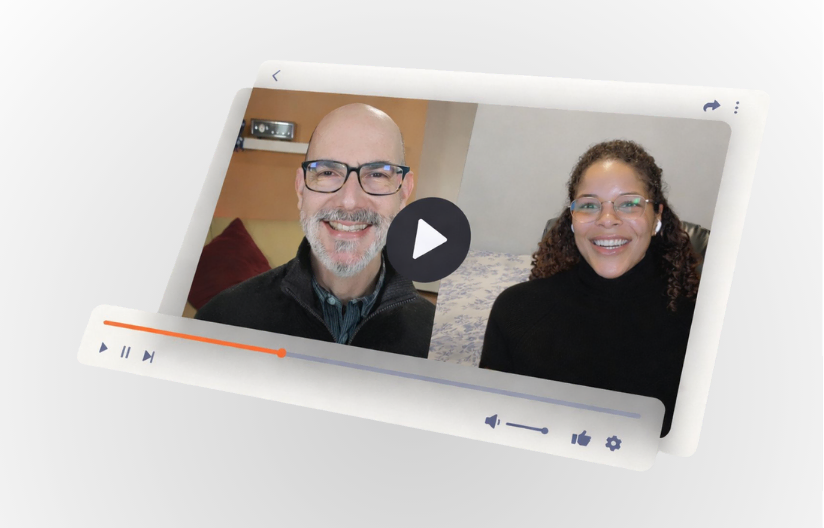
Probe CX is reshaping customer and employee experiences with AI, automation, and smarter digital design. In this episode, Robert and Brendan share how their team delivers measurable outcomes — from reducing handle time and boosting first-contact resolution to enabling self-service during major outage events. They also discuss the future of the contact center, the rise of agentic AI, and why elevating employee experience is key to great CX.
Want to listen more?
Subscribe to our free newsletter and get updates in your inbox on new episodes released each week!
Subscribe to our free newsletter and get new episode updates in your inbox



Robert Cooper
Digital Experience Architect, Probe CX
As Digital Experience Architect at Probe CX, Robert Cooper blends hands-on contact center experience with deep Genesys Cloud expertise to design seamless, future-ready customer journeys. After starting his career on the phones and later managing platforms and IT operations, he now architects digital solutions that unify customer, agent, and management experiences.

Brendan Crawford
Head of Digital Experiences and Success, Probe CX
With more than 25 years in contact center operations and digital transformation, Brendan Crawford leads Probe CX’s Digital Experience & Success team in delivering measurable outcomes across CX and EX. He translates business goals into strategies powered by AI, predictive routing, and automation. Brendan also advocates for innovative workforce enablement, such as simulator-based training, to accelerate agent readiness and enhance customer loyalty.
Marissa: Welcome to Level Up CX. I’m Marissa Gbenro.
Michael: And I’m Michael Logan.
Marissa: In each episode, we delve into the most pressing issues, opportunities, and challenges in customer experience right now, and how you can use CX technology to see real business value.
Michael: Today we’re joined by Robert Cooper and Brendan Crawford from Probe CX. Robert and Brendan are going to talk to us on how they are able to create value from their CX strategies.
Marissa: Welcome, Robert. Welcome, Brendan.
Robert: Hi, Marissa. Hi, Michael. Happy to be here. I’m Rob Cooper, Digital Experience Architect here at Probe CX. Extensive experience with Genesys Cloud and other CCaaS and CRM technologies.
Brendan: Thanks, Michael. Thanks, Marissa. It’s great to be on the podcast. I’m Brendan Crawford. I’m the Head of Digital Experience and Success here at Probe. I have a career that spans over 25 years in the contact center industry. So everything from conversational AI deployments through to actually managing operations themselves.
Marissa: Wonderful. Welcome both and thank you so much for joining us. So to start off, can you please tell us about Probe CX and how your roles as Digital Experience Architect and how Head of Digital Experience and Success connect to Probe’s wider mission of elevating both customer and employee experiences?
Brendan: Absolutely. So at Probe, we’re actually the number one ranked CX and BPS service provider to Australian and New Zealand clients. We’re the partner of choice to over 100 clients across government, new economy disruptors, and blue chip enterprises. Delivering those services, we have over 19,000 staff across four countries, Australia, the Philippines, New Zealand, and India. So where Robert and I fit in are in our digital team. And we partner with Genesis and a range of other ecosystem partners to deliver innovative digital solutions to our clients. To talk to that digital scale, we have over 120 digital transformation services experts. So you can think of engineers, data scientists, transformation consultants, and the like that have delivered solutions, including over 40 Genesis Cloud deployments. Our AI solutions have actually assisted over 200 million conversations across 70 clients as well. So when Probe delivers a digital transformation solution to a client, we want to make sure that they achieve the right business outcome. And that’s where Robert and I fit in. Our digital experience and success team operate across the spectrum of pre-sales through to value realization, which is really that classic space of customer success. And whether we’re looking at a solution that improves customer experience, drives NPS, or improves the employee experience, we craft that solution from concept to reality, and we continuously improve it.
Michael: So Rob, you’ve gone from platform and industrator to digital experience architect, guiding multiple Genesis Cloud deployments. How’s that evolution spread, or sorry, shaped the way you design experience and what lessons can other architects borrow from your journey?
Robert: Yeah, thanks, Michael. I’ve been fortunate enough to, through my education and traversing different roles in my employment, gleaned quite a good experience to help shape future experiences through my roles. So I used to take, I did actually take calls in a contact centre previously, working in an IT service desk, and then worked through various IT roles. was a platform administrator on Genesis Cloud for a number of years, but now in a digital experience architect role. So I think some of the lessons learned are really considering the multiple personas and experience. Obviously, the heaviest weight is on our customers. We want our customers to have brilliant experiences. And I think that’s where, rightly, the focus is on a lot of the time. But we also want to consider our agents, our frontline staff members, but also management and decision makers. And when I talk about considering all these personas, we want to ensure that when the customers are navigating through a journey or an experience, if there’s different data points being gleaned and they maybe don’t finish, that complete journey, that golden flow or golden journey, and they fall out of that, we want to make sure that if they are going to escalate into the contacts and to our agents, our agents are enriched with the information to seamlessly take that experience from the customer and make it really frictionless. Similar for our managers, from that top-down level view, they want to be able to see where that customer fell out. and potentially understand why and have a look at all those data points that were captured across that customer. So I think building, not just considering the customer experience, but considering your internal teams in that and how they support and create that feedback loop to the experience is very important. I guess the other two lessons would be future-proof as much as possible. We all work with tight deadlines, and sometimes the easiest route to delivering an outcome or an experience may not be the most future proofed. And it’s very important to think about the future, think about what are some of the changes in this experience that might happen on a second horizon, six months, two years down the track. And you don’t want to have to do a lot of rework. You want to enable your teams to stay dynamic and stay nimble and change experiences. And also support proof, make sure that it’s something that can be but easily supported through your support teams and really trying to reduce that overhead in the long term.
Marissa: Brandon, when you’ve run operations for large telco teams, when you look at metrics like average handle time or NPS, what’s your strategy for translating those goals into architectural choices? So for example, rolling out predictive routing.
Brendan: What a great question. And there’s an interesting dichotomy here. We actually have a bit of a habit in the industry of really just always thinking about AHT as the goal. And sometimes it can be. However, when we’re looking to create those positive business outcomes that our clients are looking to achieve, those business outcomes usually take the form of something more like, I want to increase my revenue or share of wallet, or I want to take cost out of my business, or I want to do more with what I have, so I want to scale my business. So we look to then translate those positive business outcomes into those metrics that matter, which are then tied to things like improving average handle time, net promoter score or FCR. We do know that, for example, that net promoter score is very heavily tied towards first contact resolution from our experience running operations. But with our metrics locked down, we are then data focused. And this is where we have a little bit of a secret sauce here at Probe. We have the benefit of not just running the tech for our clients, but also the agent programs. And so what that means is we can look over our client base and we can really take a look at what types of solutions have delivered those outcomes and what the critical success factors are. So predictive routing is just one of the solutions in our kit bag, and we know it helps us with AHT and FCR. But our data tells us that it actually is amplified, those benefits are amplified when it’s deployed in conjunction with an AI concierge IVR. So to talk to that, we have a client in the logistics space, and initially we enabled an AI concierge IVR for them. And that already reduced average handle time by about 25 seconds, and it also reduced internal transfers by about about 40%. But what we then saw was that after the deployment, we applied predictive routing and we saw a further 30-second improvement in average handle time. So we really do take that view of the positive business outcome to then drive towards those metrics that matter and then figure out which solutions are going to deliver that particular outcome.
Michael: It’s good to hear stories like that. Now, kind of switching gears a little bit, Rob, with so many customers’ interactions now happening across digital channels, how has that shifted the way your team operates? What integrations or automations have made the biggest difference for agents?
Robert: The environment has certainly shaped over the past few years. And you know, I’m sure it’s not unique to us. We’ve seen a massive shift to digital channels from voice. We’ve spearheaded one of our with one of our larger clients, a digital adoption strategy, and we’ve actually seen a 70 move from 70% of interactions in the voice space. And we’ve reduced that down to 30% within voice with digital digital interactions across a range of channels, making up that the rest of that 70%. These are, I think it’s really been amplified by the move from the web chat to messaging and async messaging and really the efficiencies and the utilization that brings with our team members not having to wait in a synchronous channel for something to be closed off and being able to quickly move on and handling multiple interactions at once. I think how that’s affected our teams here at Probe is it really challenges us, but also gives us an opportunity because we have such a range of personalities and workforce. Some of our team, it enables us to really target some of our team members to those channels. So where some agents or team members might be great having a yarn on the phone and talking and creating those great customer experiences with people in the voice channel. We have other team members that are great multitaskers and are able to handle four to five, maybe even six digital messaging channels simultaneously, like an octopus, really. And then there’s some agents that can actually, you know, some team members that might be doing both voice and digital channels in a blended strategy. I think in terms of automation, and especially in recent years of the advent of AI, we’re seeing obviously a large adoption in automation opportunities, and we’re investing a lot in that space. But what we see is that there’s different customer, based on different customer intents, the need for the customer may be different. So where the customer intent may be more of a confirm or transact type of intent, that’s where we really see our, you know, digital automation and digital agent opportunities flourish, where if it’s just a customer needs to confirm a specific thing, we can fully automate that contact. But where it’s maybe more of a discussion, a workaround, or a customer wants to vent, we see that that customer needs a human agent and actually needs to go through and have that human-to-human connection. And there’s a bit of a, you know, there’s a bit of a mix of percentages for, you know, confirm, transact, validate, discuss, workaround, and vent. But we really see that there’s opportunities to fully automate some of these customer intents, and we do need to still, We still see a lot of value with our customers speaking directly to our team members for those more human to human interactions. And I think, lastly, some of this technology, we’re releasing the opportunity to uplift our agents’ experience as well. One great example is Genesis Copilot. So we’ve recently launched Genesis Copilot across a number of lines of business for us, and we’ve seen incredible results and incredible anecdotal feedback from our team members. So we’ve seen about a 30% reduction in… after call work just from the summarization of contacts. And what we’re hearing from our team members is that alleviation of cognitive load of just writing notes and them actually being able to focus directly on assisting our customers is a game changer for them.
Michael: Again, great results from utilizing AI correctly. So those are, again, that business outcomes there are extremely important. But I will kind of follow up. What’s the, with the continual rise of customer expectation around what customer service looks like in instant support and multi-channel access, how has that shaped your strategy with that?
Robert: Thanks, Michael. I think that’s a really important question because our customers expect immediate support Now, and I know I do as a consumer myself. It’s very important that we, because we have the technology now to be able to understand the customer’s intent. We have so many data points where we can understand the customer’s journey and why they’re contacting and what their desired outcome is. It’s really important that armed with that information, we actually educate the customer on the best way for them to get their outcomes as well. So I think a lot of that, a lot of it is we have the we have all the ingredients to automate some of these experiences, but we have to educate our customers on the best way to get that to get their desired outcome. So a great example of this is we have one of our clients is a energy distributor, has a We understand that when there’s a specific power outage on the network, that the number one contact driver is when will my power come back on? Is there any important information I need to know? How do I track this? How do I track this through to a resolution? So, you know, through integrations to outage management systems, we’re able to surface that information to our customers in the first instance. And when there’s not surge or when there’s surge, we’re able to ask our customers, what are you contacting about? And as soon as we understand that intent, we offer them that self-service capability instantly so that they can be served. And I think a testament to this was there was actually a huge surge event for this customer. It was their largest in in their history. And we saw a contact center that’s relatively lean and about 500, 600 calls a day, experience 43,000 calls within the first half of the day. And testament to Genesys Cloud was able to handle the load, whereas previous platforms weren’t able to. They would fall over and crash. But we were able to self-serve 63% of the calls with that outage management experience. And just by asking the customer, great, what’s your postcode? Or if you don’t know your postcode, what’s your suburb? Or what’s your actual identifier for your house? And we’ll give you that information and when your power is going to be restored. So again, to round that out, it’s about providing these automation opportunities to our customers, but helping them, helping educate them on how to navigate and get to their right outcome.
Marissa: Love everything that Rob just said about how taking proactive processes and putting them in place, like outages, not only helps customers get the information that they need immediately, but I can also assume it’s helping employees provide better experiences and feel more prepared. And I know in the past, we’ve spoken about employee experience and things like streamlined onboarding. So Brandon, how does Probe Link great CX to great employee experiences? And how have initiatives like streamlined onboarding translated into direct outcomes for your clients?
Brendan: What a great question. So we have a really well thought through onboarding journey for our core platforms and capabilities. However, when it comes to getting an agent onboarded into a program, we’re looking to transform the way we train those agents. So like many contact centers, we have a challenge to improve that time from recruitment of an agent to the time that they’re actually taking customer contacts and really elevate their competency. So one of the ways that we’re working on that is by applying simulator-based training to that onboarding journey as well as in embedding that in our operations. So we’re incredibly excited about the results of a recent proof of value that we executed in this space with one of our utility clients. So we applied that simulator-based training for just 15 minutes per day for a group of agents over 4 weeks. And the performance impact we measured in that proof of value was phenomenal. So we saw some 30% process quality score improvements. So relative to, and this is relative to the average agent group, They had a 30% higher process quality score and they improved their customer effort score by 18.3%. And to talk to customer effort score, it’s a measure of loyalty or, you know, that’s sort of seen in the industry is a little bit of an enhancement to an NPS question. And this is again across an improvement against the average agent group. So just incredible results from that. So we’re now looking to scale those results out. of the proof of value and validate them, make sure that they continue to hold true. I think it’s just a testament to some of the innovative ways that you can apply some technology to help really bring the employee experience and level that up as well.
Michael: So to kind of, and this will be to both of you, I think we’ll start with you, Brandon. What’s looking ahead five years, what does the contact center or the future look like from your perspective? Like where do you see AI and automation doing the heavy lifting?
Brendan: Great question again. So when we’re talking or thinking about that contact center of the future, we think about the personas that are operating the contact center, the customers, the agents, and the operations managers. So a customer, in our view, will be first assisted by what we call a digital agent. And that’s really irrespective of the channel. So that digital agent may be a concierge or it may be automating contacts. And today it’s really common with structured AI approaches to be able to achieve maybe 10 to 15% of contacts being automated. And some industry verticals can achieve far north of that, like the energy distribution client Rob just talked about. what we’re seeing is that with generative AI, with those standard RAG-based approaches that push that a little bit further ahead again, but really to drive higher numbers, we need access to data. And we’re seeing now the rise of agentic AI with access to tools. And that when you see that in conjunction with platforms like CRM and other backend systems shifting into cloud, that access to data will start to become much easier into that future. period. And we see that combining with that adoption of agentic AI to automate much higher volumes of those simpler conversations. So that marks a shift for our human agents and who’ve traditionally started on simpler conversations and upskilled to tackle those more complex conversations. And hence, that’s why we’ve looked at things like those simulator-based training. But also for those agents, We see that they need to be assisted and helped out with tools like knowledge and access to capabilities like Copilot, whether that’s to surface knowledge in real time as they’re dealing with a conversation or whether it’s actually to help them in that after call work space. So we see that as really critical. Then as we move into that operations management space, their role really changes from just managing the human labor of a contact center to also managing those digital agents. We call these new operations managers, enhanced managers, and they’re going to have generative AI-powered tools driving insights, automated suggestions for optimization and CX improvements as well. So quite a shift in their role. We then see a fourth persona in a digital AI operations executive. And this is really about the application of AI technologies like document AI and image AI. And there’s still a huge amount of paper-based forms that contact centres deal with in back-end processes. So you could imagine, for example, an airline that accesses your baggage claim by automatically by using an image AI from a photo that’s been uploaded that your agentic AI voice agent has collected from the customer. So we see just a huge change across all of those personas in the contact center.
Robert: One more note, thinking about the future with the rapid escalation of AI, I think we touched on earlier how there’s a, you know, there’s In the past five years, there’s been a big shift from voice to digital channels. I think with the advancements of AI, we’re actually going to see our customers go to the voice channel, but in a different way. We already know that you can very easily speak to large language models and get great results. And I think with the technology in the pockets of consumers, consumers are going to be more open to using the voice channel for automated experiences. So I think there may be a slight shift back to the voice channel, but in a more agentic, automated fashion, as opposed to going directly to a contact center.
Marissa: As we’re looking to the future and we just discussed where we think the contact center of the future is going and what does it look like. Based on your journey and all of the information you’ve collected, the highs, the lows, the triumphs, and areas of opportunity, what advice would you give others trying to level up their digital customer experience?
Brendan: So in leveling up, we believe you need a really clear picture of where you are today, a vision of where you want to be, and a broad alignment across various stakeholders in your organization. So we’re talking about stakeholders like the head of customer experience, the contact center manager and head of IT, and even the C-suite, like the chief operating officer. So with an alignment in place, you can then chart a set of initiatives that levels up your digital customer experience that aligns to your business goals. And if that sounds like a lot, Probe can help guide this process with our transformation consulting practice. We know that once we have a bit of a roadmap in place, it’s then about executing. And this might sound a little bit odd in 2025, but we still see a lot of customers trying to break each of these initiatives then down into projects and build business cases to fund each individual piece of work. So what we’ve found instead is really adopting agile practices and to lean into those initiatives on the roadmap collectively, employing that continuous improvement mindset delivers value faster because it eliminates a lot of those toll gates along the way. So if you’re ready to start that journey, we’d be happy to help out.
Marissa: Brendan and Rob, thank you so much for joining us today and sharing your expertise, your strategies, and all of your recommendations. For our audience listening, thank you. And if you like the podcast, please subscribe and you’ll get our next episode in your feed. Also, be sure to visit genesis.com to learn more about how you can level up your customer experience. Until next time, thank you for listening to Level Up CX Tech.