Average wait time (AWT) is the average duration a customer spends waiting in a call queue before being connected to an agent. It’s a core contact center metric that helps measure efficiency and customer experience. A shorter average waiting time signals streamlined operations, while longer delays may indicate staffing or process issues.
Enterprises use average wait time to monitor and manage customer satisfaction in real time. By tracking AWT call center dashboards, leaders can identify peak demand periods and adjust staffing accordingly. Reducing the average waiting time directly improves customer perception of responsiveness and trust in the brand.
Workforce optimisation tools integrate the average wait time formula to predict agent demand. By analysing historical data, enterprises forecast future call volumes and schedule the right number of agents. This ensures balanced workloads, reduces burnout and maintains a consistent customer experience.
Comparing call center average wait time across regions or departments reveals operational strengths and weaknesses. Enterprises use this insight to set performance benchmarks and align service-level agreements. A clear understanding of how long the wait time should be helps establish realistic targets that drive accountability and continuous improvement.
Organisations track average waiting time to measure the impact of self-service tools like chatbots and IVR. When these solutions successfully resolve customer enquiries, they reduce queue congestion and improve overall AWT performance. This not only saves costs but also enhances convenience for end users.
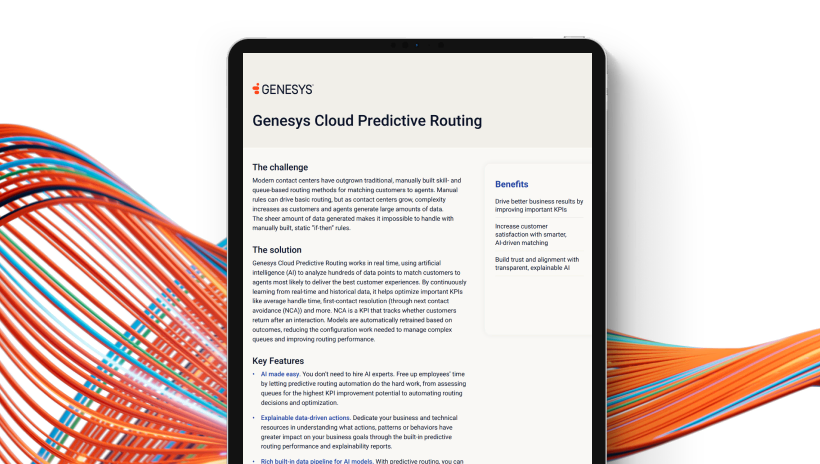
Genesys empowers enterprises to lower average wait time through AI-driven routing, workforce engagement and intelligent forecasting. Discover how our solutions help you connect with customers faster and deliver exceptional experiences every time.
Discover how Genesys customer Vaillant had a 50% reduction in average caller waiting time here ›