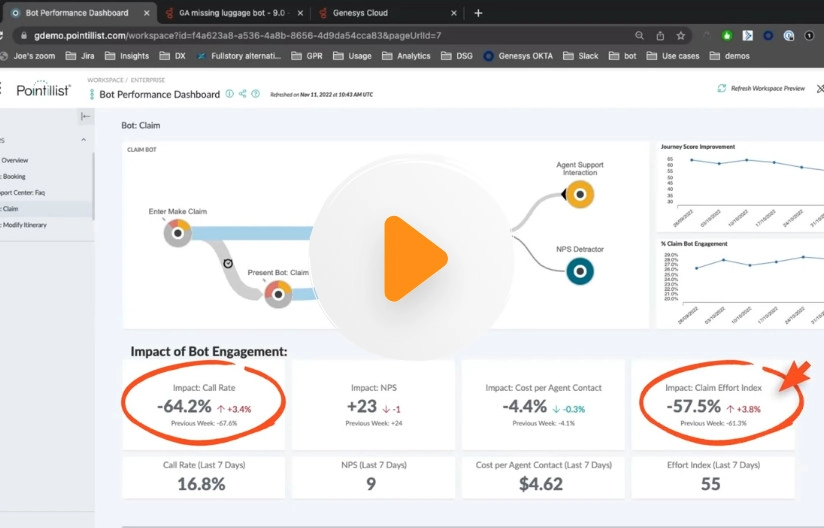
Experience orchestration is the process of designing, coordinating, and optimising customer interactions across all channels, touchpoints, and departments to deliver a seamless and personalised journey. It connects data, systems, and teams in real time to ensure every interaction – whether digital, voice, or in-person – feels consistent, relevant, and aligned with the customer’s needs and preferences.
Rather than managing each touchpoint in isolation, experience orchestration looks at the entire customer journey. It uses data and artificial intelligence to understand context, anticipate intent, and trigger the next-best action or message, automatically and intelligently.
For businesses, experience orchestration improves customer satisfaction, increases loyalty, and drives operational efficiency. It also helps break down internal silos by synchronising marketing, sales, service and support functions around a shared view of the customer. By delivering the right experience at the right time, organisations can build stronger relationships and stay competitive in a rapidly changing environment.
“This is where experience orchestration becomes essential – and why it’s emerging as the new strategic platform powered by AI to connect and coordinate all the people and systems of record that go into delivering on your customer experience vision. Experience orchestration is no longer a niche technology. It’s a strategic imperative for CEOs, CIOs, and CX leaders alike.”
Olivier Jouve, Chief Product Officer, Genesys
Experience orchestration for enterprise businesses
Experience orchestration is the coordinated, real-time management of customer interactions across all touchpoints, channels, and departments within an enterprise. It connects data, systems, and processes to ensure each customer receives a seamless, personalised experience, regardless of how or where they engage with the business.
In complex enterprise environments, experience orchestration leverages AI, automation, and customer context to deliver the next-best action or message at every stage of the journey. It unifies operations across marketing, sales, service and support, breaking down silos and enabling consistent experiences across regions, brands, and teams.
This approach helps large businesses proactively meet customer needs, increase loyalty, and drive measurable outcomes such as higher retention, revenue growth, and operational efficiency. By orchestrating experiences end to end – from first contact through post-sale support – enterprises can scale personalised service whilst maintaining control, compliance, and agility in a fast-changing market. Experience orchestration is not just about improving touchpoints; it’s about aligning the entire organisation around the customer.